© 2026 Rentokil Initial plc © JP Pest Services. All Rights Reserved.
Locals and visitors across New England share the same frustration when it comes to scavenging birds in August. Gulls work the coastlines, geese hold their ground in parks, and pigeons line the rooflines—all of them bolder and hungrier as summer peaks. It's the season when fledged juveniles begin foraging on their own, and resident flocks swell, while the warm weather keeps business’s loading doors propped open longer.
Three local species drive most of the risk at commercial foodservice facilities: house sparrows, European starlings, and pigeons, and each becomes harder to move the longer they're left. Between them, they threaten product contamination, structural damage, and risk failed food-safety audits.
The First Sightings
The earliest signs of bird nesting are easy to dismiss. A pigeon or two may settle on a parapet above the loading bay, or a few starlings gather on a receiving canopy. At this point, the birds are testing the site rather than committing to it, so it’s also when bird control is simplest and least costly.
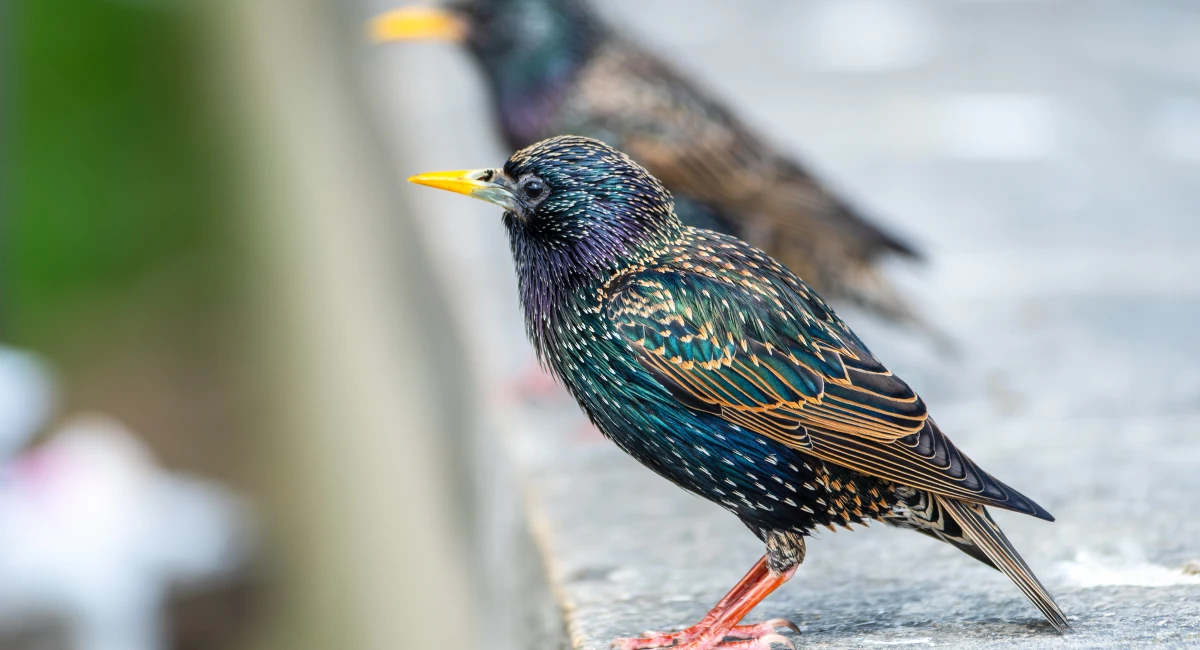
This is especially true of starlings because of how their roosts form. As summer ends, they abandon scattered nesting in favor of communal roosting, expanding their numbers through recruitment: initial scouts claim a sheltered spot, effectively advertising it to the wider flock. This causes populations to surge night after night; a site that appears to have only minor activity in early August can host a full-scale roost within weeks. While it is relatively easy to discourage a few scouts during the assessment phase, once a nightly routine is set, the roost gains momentum. Returning birds attract others, turning a manageable nuisance into an entrenched, costly problem.
From Perching to Nesting
Once birds decide a site is viable, they begin nesting. House sparrows are a particular concern here. Small enough to pass through gaps in dock seals, corrugated roofing, or open bay doors, they establish nests inside warehouses and processing units, often in ceiling voids or behind racking above stored goods.
You may then have a problem with secondary pests. Bird nests routinely harbor mites, beetles, and flies, and when a nest sits above inventory, those insects migrate into the surrounding furniture, equipment, and products.
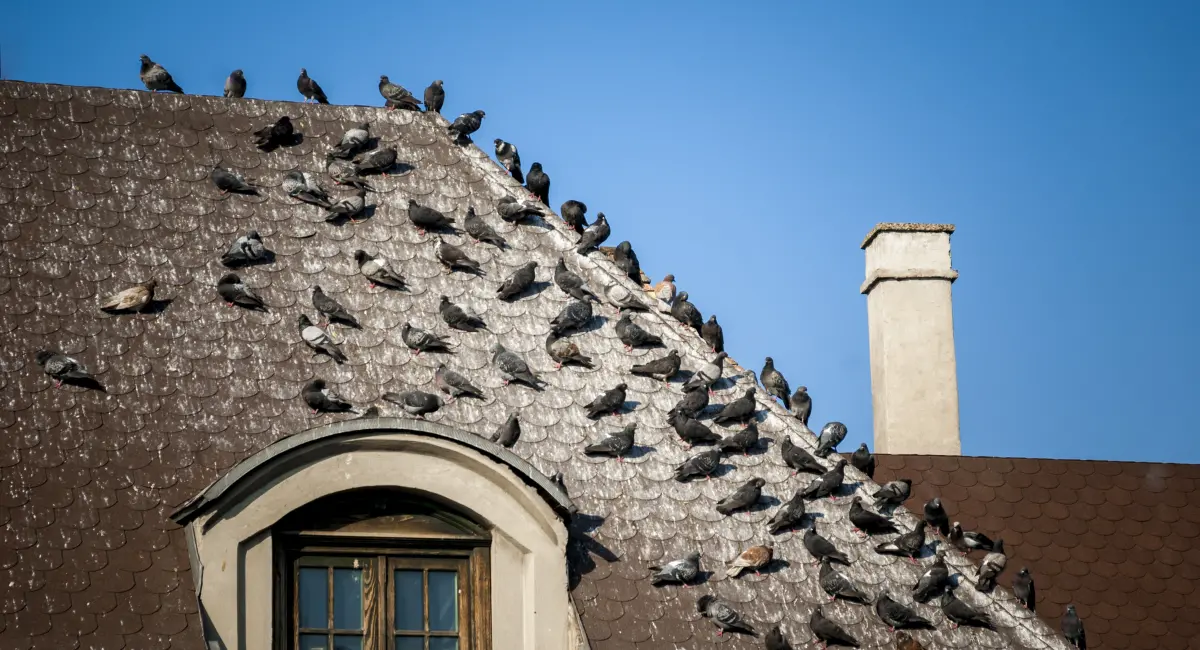
At the same time, pigeons begin to roost permanently. Their acidic droppings initiate the slow degradation of roofing membranes, HVAC housings, and signage, all of which can be expensive to repair. Dealing with bird damage early on, through commercial bird control services developed around site assessment, is far less costly than removing an established roost later.
Why Auditors Take It Seriously
For food safety and quality assurance teams, bird activity around the dock is a regulatory concern, with penalties and closures for compliance failures:
- Food safety findings: Droppings and feathers near receiving points are clear contamination risks. Under the FDA Food Code, pests in or near food-handling areas are treated as a critical deficiency.
- Pathogen exposure: Accumulated droppings can harbor pathogens affecting staff, including the fungus associated with histoplasmosis, which becomes an airborne hazard when dried material is disturbed by dock equipment.
- Slip hazards and fouling: Heavy starling fouling on dock aprons and delivery vehicles creates both a safety risk and a visible hygiene problem during inspections.
It is worth noting that pigeons, starlings, and sparrows are non-native species and are exempt from the protections of the Migratory Bird Treaty Act. Commercial facilities are permitted to manage them actively, and auditors generally expect to see evidence that protocols are in place. However, the gulls and Canada geese so visible across New England in August are the exception—both are federally protected, so control is limited to exclusion, deterrence, and sanitation rather than removal.
Bird Control Solutions
Each species exploits buildings differently—sparrows find gaps, pigeons claim ledges, starlings work open canopies—so no single measure protects a whole site. An efficient, tailored bird control program combines several methods to prevent birds from landing, roosting, and nesting where they shouldn't.
-
Bird netting offers the most complete exclusion. Installed across dock overhangs, canopies, and internal roof voids, heavy-duty netting seals off entire areas, keeping sparrows and pigeons out of the sheltered spaces they favor.
-
Bird spikes target the narrow ledges, parapets, and signage that pigeons and gulls use to perch. The spikes don't harm birds; they simply remove the level, stable surface a bird needs to land, redirecting the flock elsewhere. On rooftops and loading-bay edges, they are a low-profile way to protect perches from permanent fouling.
-
Electric bird deterrent systems are discreet tracks that deliver a mild, harmless pulse when a bird lands, conditioning it to avoid the surface altogether. Because the track sits nearly flush, it protects storefronts, rooflines, and signage without altering their appearance—useful where spikes would be too conspicuous.
Other deterrents, such as gels, sensory deterrents, repellents, and habitat modification, fill the gaps that physical barriers cannot.
As part of a wider commercial pest control program, JP Pest technicians will review your receiving bays, waste areas, and rooftop perimeters to identify early activity, while it is still relatively easy to fix—and well before it leads to a failed audit.
Every facility faces different pressures, so every plan should be different too. Start a conversation with a JP Pest expert about a tailored exclusion to ensure your site is fully protected.
Book Your Free Pest Inspection Today
Our local technicians will assess your property and recommend tailored solutions. Fast, friendly, and completely obligation-free.
- Safe, targeted treatments
- Local experts, fast response
- Trusted, trained technicians