© 2026 Rentokil Initial plc © JP Pest Services. All Rights Reserved.
Updated on: July 23rd, 2026
Quick Overview
- Weevils are tiny, reddish-brown pantry pests known for their distinctive trademark snout noses
- The larvae live and feed inside grains like rice, flour, and cornmeal products
- Prevent infestations by inspecting bags and storing all dried grains in airtight containers
- Infested food should be discarded, but accidentally eating weevils won’t cause illness
- Eliminate them by cleaning shelves with vinegar or freezing grains for one week
You never thought it would happen to you, but here you are, searching the internet for “what are these bugs in my rice?”. You’re probably only moderately interested in the entomology of the situation -- species, life cycle, etc. -- and vastly more concerned with “how do I make sure this never, ever happens again?”.
Well, good news: We can handle all of your questions and then some.
Read on to find out what weevils look like; what to do if you have them; what food you should bin, how to prevent them coming back; plus when to call in professional pest control help.
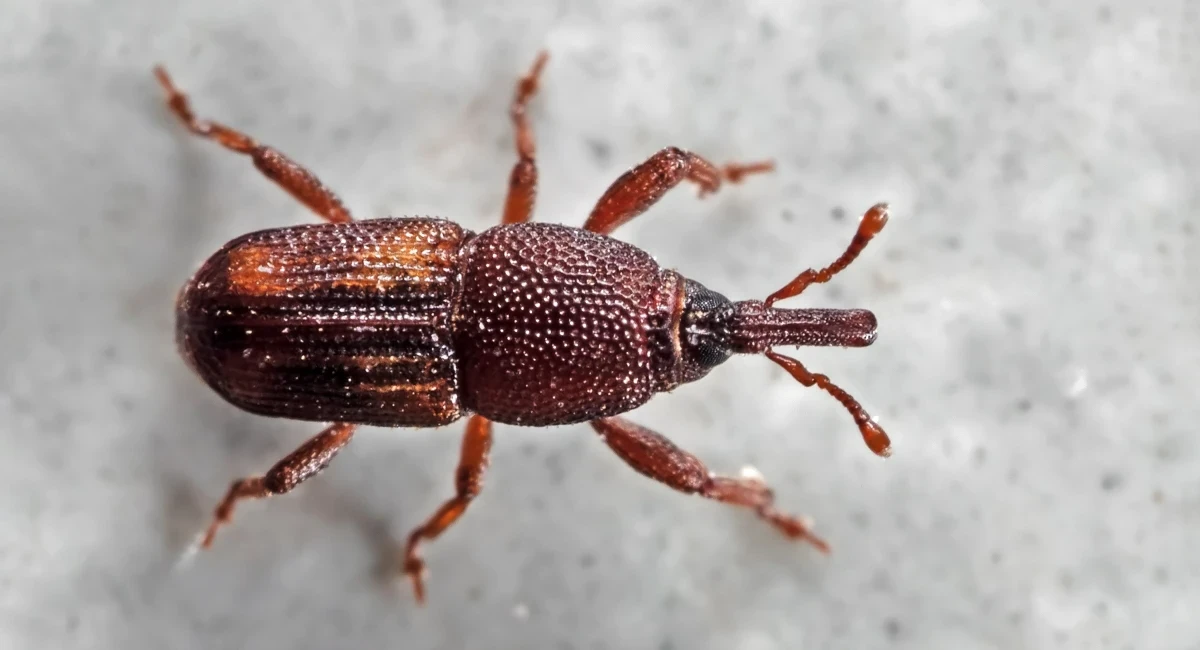
Weevil Appearance
You’ve almost certainly found weevils if the little dark specks in your stored grain or seed turned out to be tiny creatures.
Weevils start life as tiny, wrinkled, grub-like larvae that live in — and eat from — the insides of seeds and grain fibers. They only emerge after about a month when becoming adults.
Adult grain-eating weevils develop slender, hard-shelled bodies that appear pitted with tiny holes. They grow to about 1/8-inch long and become a reddish-brown. Their species include rice weevils, granary weevils and maize (corn) weevils. Rice weevils have four faint yellowish spots on their backs, but they all have that trademarked snout nose.
Weevil Appearance
You’ve almost certainly found weevils if the strange little dark specks in your stored grain or seed turned out, upon closer inspection, to be tiny creatures. Weevils begin life as tiny, wrinkled, grub-like larvae that live in, and eat from, the insides of seeds and grain fibers, only emerging as they enter adulthood after about a month in the larval state.
Adult grain-eating weevils develop slender, hard-shelled bodies that appear pitted with tiny holes. They grow up to about 1/8-inch long and develop a reddish-brown color. There are several species including rice weevils, granary weevils and maize (corn) weevils. Rice weevils are distinguishable by the four faint yellowish spots on their backs, but they all have that trademarked snout nose.
The Two Main Types of Weevils
There are two main types of weevils—the pest species, which eat grains—and the non-pests, which eat plants.
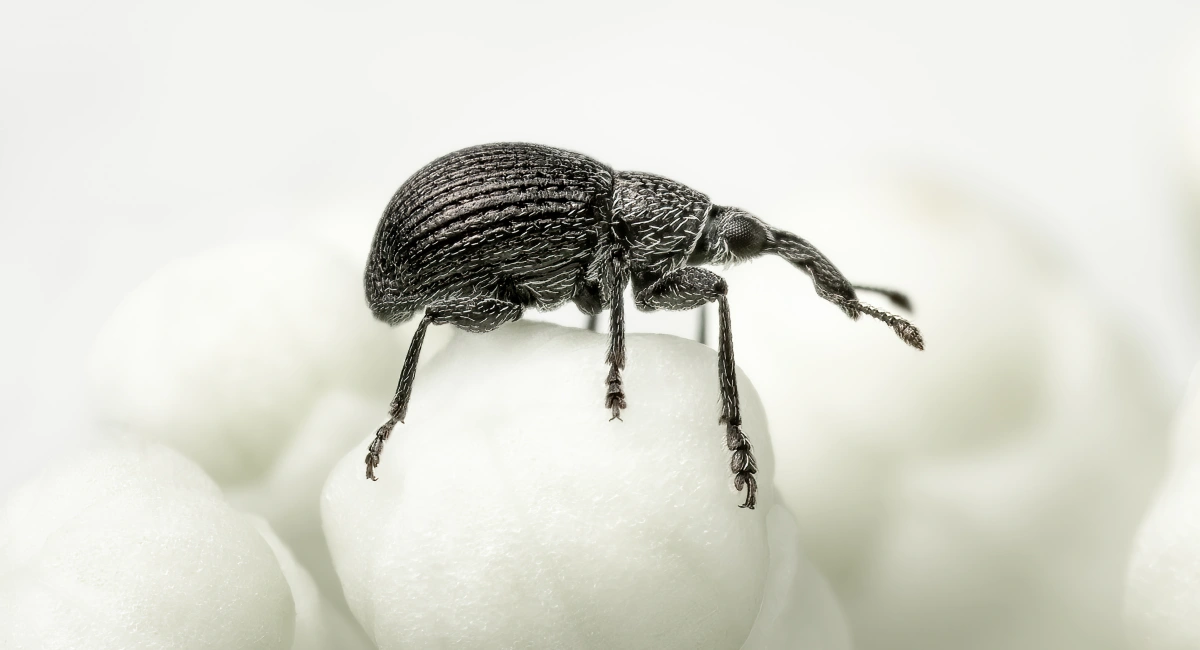
Indoor Grain-Eating Weevils
The grain-eating weevils feed on starches like rice, flour, corn and cornmeal, plus nuts, beans, cereals and other such foods you keep in your pantry. While beetles live and feed on those foods, weevils start their life inside your food.
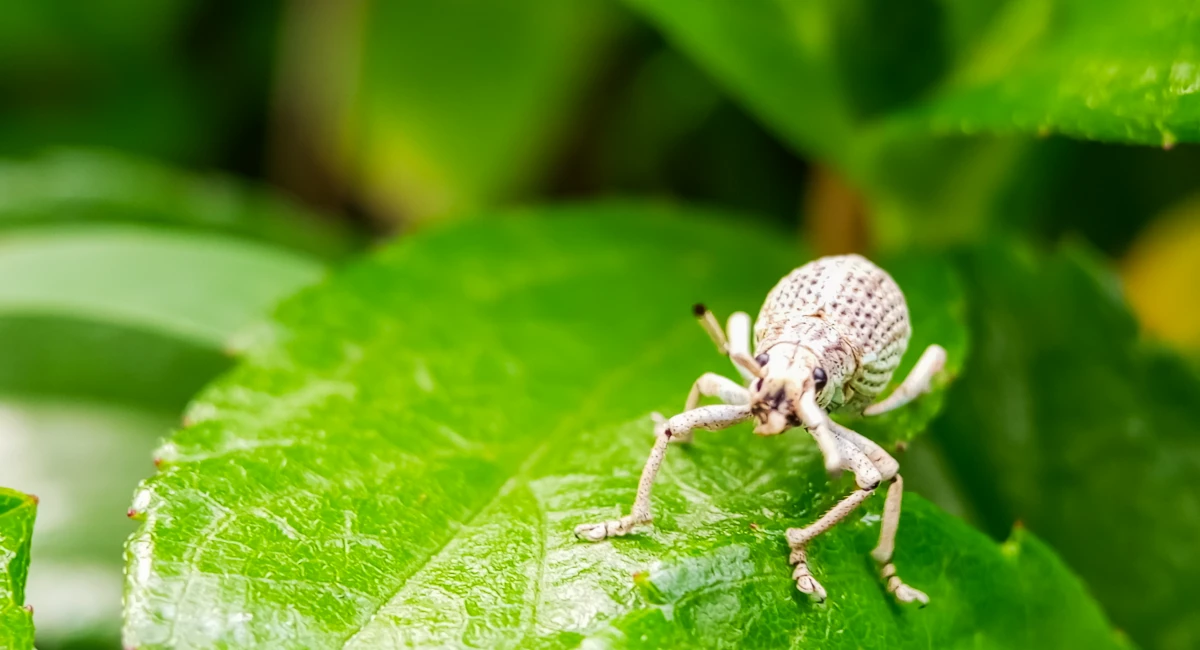
Outdoor Plant-Eating weevils
The non-pests are typically found outdoors feasting on all sorts of various plants.
Although the outdoor variety does include some destructive species—such as the boll weevil which destroys cotton— for our purposes, they’re mostly harmless.
Weevils Can be Hard to Detect
Just because you can’t see them, doesn’t mean they’re not there. You’ll see them after they emerge from inside the grain, so you can generally take care of the problem yourself without having to call a pest control pro (unless, of course, you can’t find the source of the infestation).
The best way to control weevils is to keep them out in the first place. As they don’t typically invade the same way other household pests do, this doesn’t mean checking for openings in your foundation: It means checking for openings in your groceries. If you do discover weevils inside your home:
- Physically remove them with a broom or vacuum
- Throw away any contaminated food stores
- Use pyrethrin, a safe class of pesticides, as a last resort
Other Signs of Weevils
Look out for these telltale signs:
Worm-like larvae
Sawdust-like droppings (frass) from weevils
Weevils crawling around rice
Webbing
How to 'Fear No Weevil'
How you process and store your food can go a long way to preventing weevils.
- Inspect all grains when you buy them
- Spot tiny telltale reddish dots
- Look for small openings in bags or cardboard/ thin plastic containers
- Freeze your grains for at least a week or permanently
- Store grains in airtight glass, metal or hard plastic containers
- Keep your pantry clean and free from debris
If you do find weevils:
- Throw out any items not stored properly
- Wipe your shelves down with white vinegar
- Check regularly that weevils don’t reappear
Accidentally Eating Weevils
Don’t worry. Eating weevils won’t make you sick. If you find dead weevils in a packet of grains, it’s a surefire way to know there’s some pesticide residue present. In fact, 100 grams of weevils will provide you with 6.7 grams of healthy protein.
How To Get Rid of Weevils for Good
It may be time to call in a pest professional if you still can’t find the source of the weevils, and you’ve tried all all the above steps, and you have also:
- Checked surrounding pantries or drawers
- Checked anywhere else that grains may be stored: basement, other food storage closets etc.
- Checked pet food and grass seed
Professional Pest Control in New England
At JP Pest Services, we can thoroughly inspect your home and take care of the problem for good. Weevils are not a pest that will go away on their own, so it’s important to have the issue nipped in the bud as soon as possible.
JP Pest Services is dedicated to solving residential and commercial pest problems. Our service professionals understand how to keep homes and businesses free of weevils and other unwanted pests. Request a free residential estimate or a free commercial consultation today, and we’ll tailor pest solutions to your specific problems.
Got weevils? We can help. Give us a call to schedule an inspection with the pros.
Book Your Free Pest Inspection Today
Our local technicians will assess your property and recommend tailored solutions. Fast, friendly, and completely obligation-free.
- Safe, targeted treatments
- Local experts, fast response
- Trusted, trained technicians