© 2026 Rentokil Initial plc © JP Pest Services. All Rights Reserved.
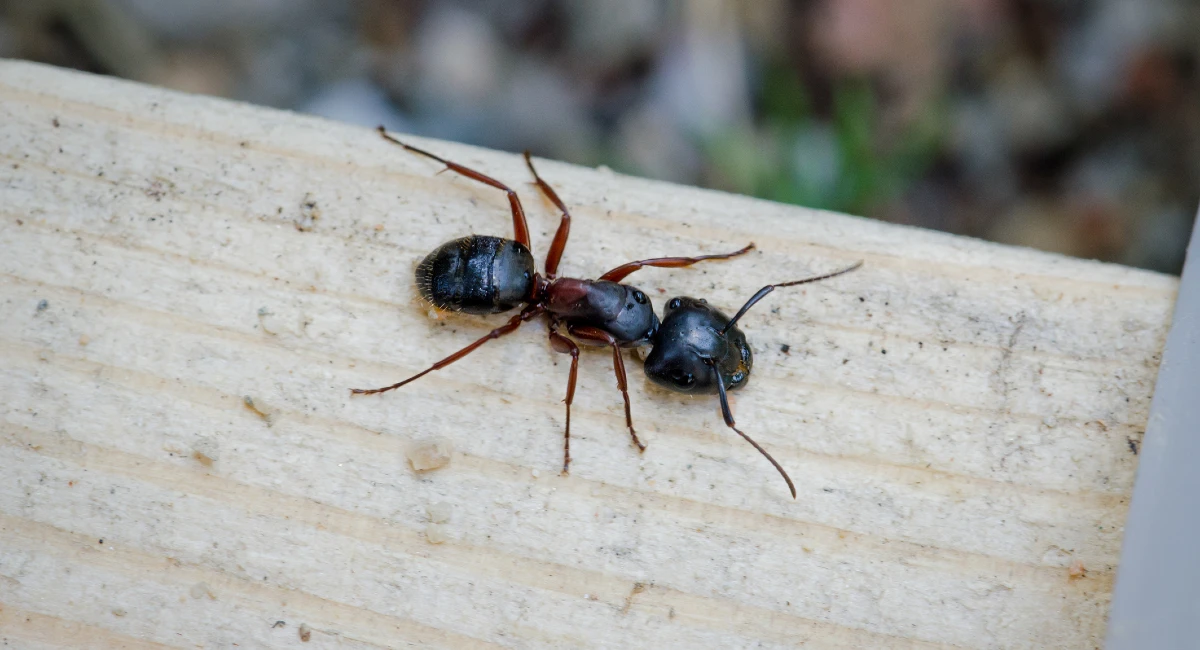
Ants outnumber us 1.5 million to one. Some species can carry as much as fifty times their own body weight, some run up to 6.5x faster than a cheetah (to scale), and others have jaws that slam shut as fast as 200mph. Most impressive of all, however, is the carpenter ant’s ability to collectively destroy a wooden structure from the inside-out… which is bad news to a homeowner.
What does that mean to a homeowner?
As a New England resident, you may not need to worry about combating the strength of a leafcutter ant or the speed of a Saharan silver ant, but we cannot overlook the massive structural damage caused by our native carpenter ant species. Carpenter ants are the single most common wood-destroying insect in New England, and collectively cost local homeowners $5 billion worth of damage every year. To add insult to injury, they can be very difficult to manage once they gain a foothold on your property. This means that New England homeowners need to always have their guards up against these formidable threats.
Why are they so difficult to control?
Contrary to popular belief, it may seem like carpenter ants are doing that work for no other reason than to stay busy all day. However, the resulting tunnels and chambers house the growing carpenter ant colony, while greatly damaging the wood in the process. This masticated fortress is where 90% of the colony’s members remain hidden, including the egg-producing queens. This is why DIY ant treatments usually prove unsuccessful, as these kill-on-contact materials only target foragers, the expendable colony members.
What about termites?
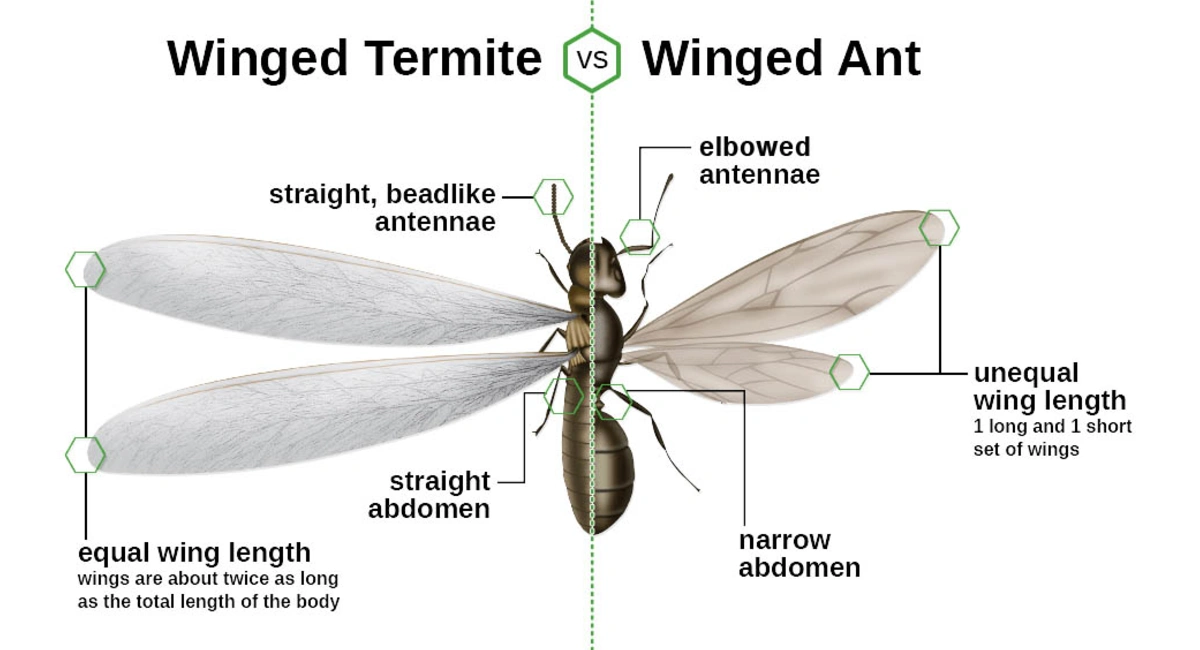
While both pests are infamous for the amount of damage they can--and will--instill on a wooden structure, termites and carpenter ants are very different pests, and should be treated as such. Three telling features to look for:
- Their body shape – Ants have pinched, wasp-like waists, while termites have cigar-shaped abdomens.
- Their antennae – Ant antennae are smooth and elbowed, while those of termites are straight and beaded.
- Their winged individuals: Termite and ant colonies produce winged reproductive individuals once a year (workers are sterile and cannot reproduce). Look for the features described above (termite’s broad waist & straight, bead-like antennae; ant’s pinched waist and elbowed antennae). Reproductives have wings to facilitate their dispersal. While both species have two sets of wings, ants’ wings are unequal in length, with the forewings much longer than the hindwings. Termites’ wings are all equal in length.
Why do they swarm?
When a carpenter ant colony grows large enough, it will produce winged reproductive individuals known as “swarmers”. When conditions are right, droves of winged carpenter ants leave the nest to mate in an attempt to start new colonies. To a homeowner, a carpenter ant swarm is significant because it represents that there is a mature ant colony nearby. If they are seen in or around your home, you’ll want to speak with a pest management professional about inspecting your home for carpenter ants, and protecting it against future invasions.
How do I keep them from invading my property?
There are two kinds of homes in New England, those with carpenter ants and those that will (soon) get them! Once an ant colony finds your home’s attractive resources, there’s little that can be done except to dethrone the queens. This is easier said than done as the queens are very well-hidden, highly protected, and never leave the nest. As battles rage outside the colony, they are busy continuously carrying out their one role: to lay eggs. Millions of them. This is why the best protection is prevention. By putting up your defenses in the spring, you’re setting yourself up for a successful, pest-free summer. Here are a few things to consider when preparing your home against a carpenter ant invasion:
- Keep dead and decaying wood away from your home; including firewood, as well as dead branches and limbs from nearby trees and shrubs.
- Don’t let water accumulate anywhere inside or against your home, as it can encourage wood damage. Over time, this moist wood becomes prime spots for carpenter ants to nest. To prevent this, plumbing leaks should be fixed immediately and rainwater should be directed away from the foundation of your home.
Finally, you’ll want to speak with your pest management professional to make sure that your home is professionally guarded against ants year-round.
You’ve seen them before. Get ahead of them this year with a proactive defense strategy, because you deserve to have total peace of mind. Take $50 off today.
Book Your Free Pest Inspection Today
Our local technicians will assess your property and recommend tailored solutions. Fast, friendly, and completely obligation-free.
- Safe, targeted treatments
- Local experts, fast response
- Trusted, trained technicians