© 2026 Rentokil Initial plc © JP Pest Services. All Rights Reserved.
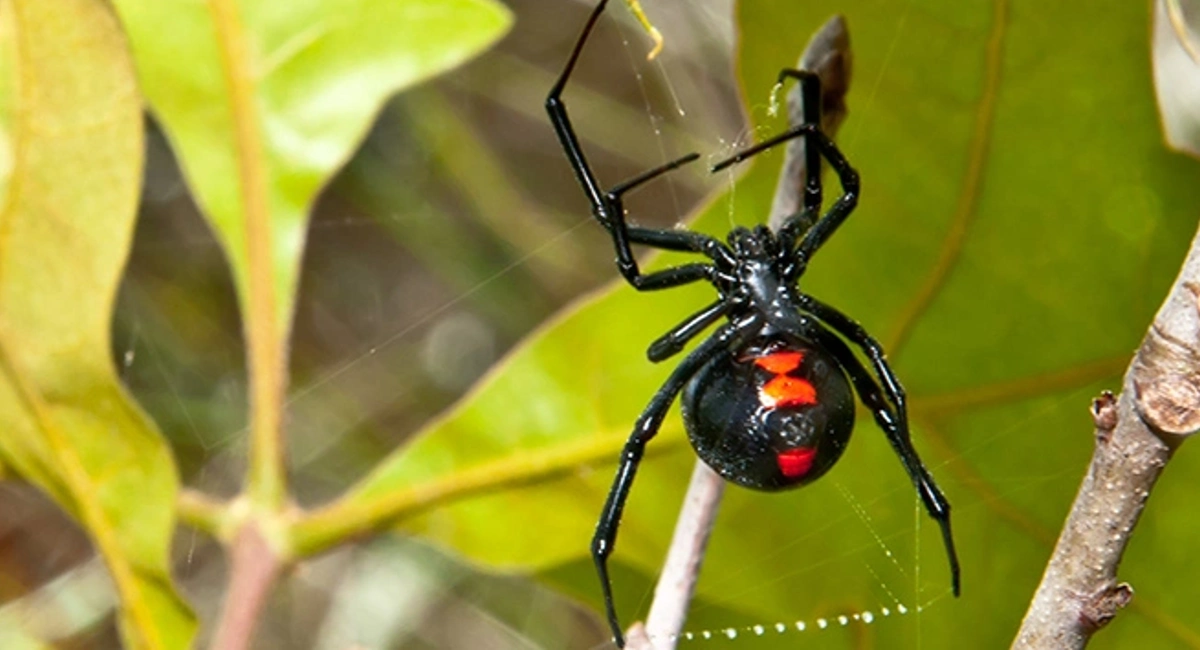
For many people there isn’t a worse feeling or fear in the world than unsuspectingly walking into a spider web. The sticky cling of the web’s silk strands on your face and in your hair elicits the fight or flight response to the monstrous fanged spider you envision dropping down and injecting its paralyzing venom into your veins. However, none of those high drama movie special effects are going to happen in real life, especially in New England…in Africa, Australia, or South America, well maybe, but still with lesser dramatic effect.
Believe it or not, spiders are more fearful of you, and they will attempt to flee and hide themselves quickly to protect from predatorial harm. Because spiders are soft-bodied, they must be more cautious with their approaches to hunting and to prevent injury and death. Most spiders are stealthy hunters and use trapping to render their victims defenseless before moving in to inject paralyzing venom before taking the chance to eat their prized meal.
Why Spiders Spend Time at Your Home
Aside from spiders being cautious of us, they are also beneficial arthropods that serve as small-scale pest control operators. The only reason that spiders take up residence in your home or congregate around exterior windows and entryways is because there is an abundance of bugs for them to eat. If there are no bugs for spiders to eat, then they will migrate to new areas where food is more plentiful to hunt.
Maintaining a pest free home will help eliminate nuisance spiders. Sometimes homeowners are confused about the reason for spider activity in the home because they don’t see the food source and the home is spotlessly clean. However, upon inspection, JP’s specialists often find tiny insect pests as the reason for the spiders’ presence and persistence. Some of the common tiny insect pests found indoors include fungus gnats, fruit flies, small ants, small moths, springtails, booklice, silverfish, termites, etc. A thorough inspection of the home, indoors and out, by a trained professional will reveal the reasons why these spider food sources exist and how to manage their populations.
Almost always, outdoor spider webbing around the windows and doorways is related to the lighting scheme and its attractance to spider food. Summer nights come to life with flying insects of all sorts and sizes that are attracted to UV rays from exterior light emittance. Spiders are equally attracted to these light sources because with a properly constructed and placed web, the spider will have more food than it can handle with little effort.
What Can Be Done to Better Manage Spider Populations?
Essentially there are 3 key actions that will be most effective in limiting spider activity in and around your home.
1. Adjust Lighting Scheme:
Adjust the lighting scheme in and around your home. High intensity white light is attractive to night flying and crawling insects.
- Redirect landscape lighting away from directly shining on the house.
- Green and blue LED lights will attract more insects.
- White and yellow LED lights attract fewer insects.
- White incandescent and fluorescent lights attract insects.
- Sodium vapor lights attract fewer insects than mercury vapor.
- Keep porch and entrance lights off and use only when needed.
- Pull down window shades at night so interior high intensity light doesn’t reflect outside.
- Close garage doors at night to keep flying insects from gaining access.
- The goal here is to get the spiders to move further away from the structure and not to eliminate them completely, which is not practical and unnecessary. Again, spiders are beneficial animals and eliminate many household, garden, agricultural, and forest pests.
2. Repair Structural Deficiencies:
- Make sure all windows and doors are screened and sealed to prevent spiders and other pests from entering the home.
- Reduce or eliminate outdoor clutter along the foundation.
- Repair any structural deficiencies on the outside of the house to prevent spider and pest entry.
3. Eliminate Pest Infestations:
Reduce or eliminate any indoor pest conditions to limited spider food sources.
- Do not overwater indoor plants. Fungus gnat populations can expand rapidly when soil that is too moist begins to support fungal growth.
- Do not keep over-ripened fruits and vegetables out in the open to avoid fruit fly attractance. Make sure you routinely inspect stored potatoes and onions that are often the source for fermenting conditions that attract flies.
- Manage unfinished pet food and clean pet feeding containers to prevent ant and fly activity.
- Manage containers in recycle bins to prevent fermentation and attractance of ants and flies.
- Move woodpiles away from the structure.
- Eliminate clutter around the exterior foundation.
Poisonous Spiders in the New England Region?
In the United States, the CDC only recognizes two spiders of medical importance including widow spiders and brown recluse spiders. The good news for the New England Region is that both spider types are seldom encountered. The widow spiders, including the most common one, the northern black widow, are native to our area and spend most of their time outdoors hiding and hunting. Common places to find a black widow spider are sheds, crawlspaces, garages, woodpiles, and anywhere outside where clutter exists. CAUTION: Never intentionally handle a widow spider because they can deliver a bite with a strong venom unlike all other spiders within our region. If bitten, seek medical attention immediately.
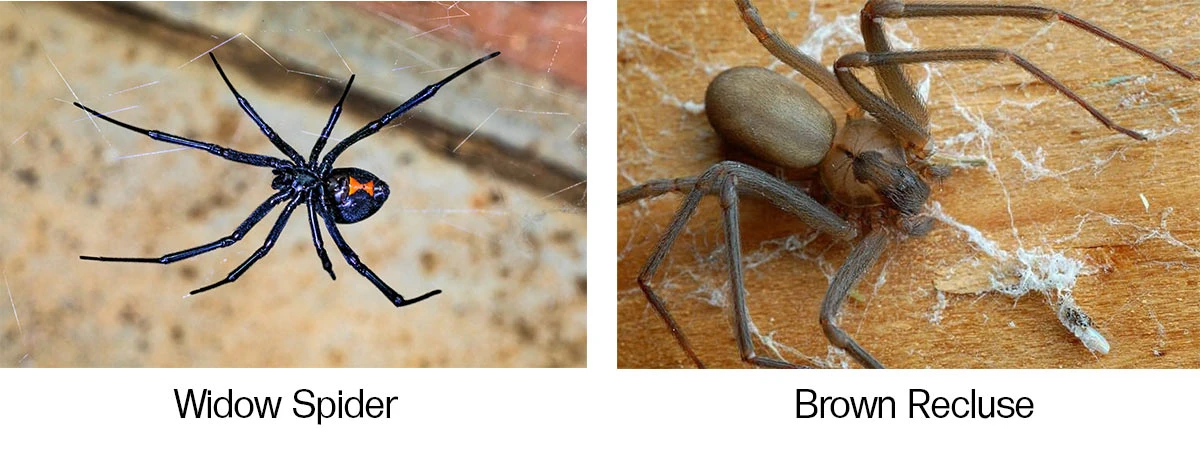
Brown recluse spiders are rarely encountered in New England, and they are not native to the region. The most likely encounter with one of these spiders would be with shipped products. These spiders live in the Midwestern and Southern United States. The venom from a brown recluse bite is a serious health concern and victims should seek medical attention immediately.
Remember that all spiders are venomous and can bite, especially when handled. Most spider bites result in a mildly itchy red wound, not too different than a mosquito bite. However, if the wound fails to heal quickly, ulcerates, or if any other symptoms coincide with the bite like headache, fever, chills, etc., seek medical advice immediately.
JP Pest Services offers a 365-day guaranteed inspection and treatment plan called the Home Protection Plan that covers spiders along with many other household pests. This plan also includes a cobweb removal service. For additional information, please contact JP Pest Services today.
Book Your Free Pest Inspection Today
Our local technicians will assess your property and recommend tailored solutions. Fast, friendly, and completely obligation-free.
- Safe, targeted treatments
- Local experts, fast response
- Trusted, trained technicians