© 2026 Rentokil Initial plc © JP Pest Services. All Rights Reserved.
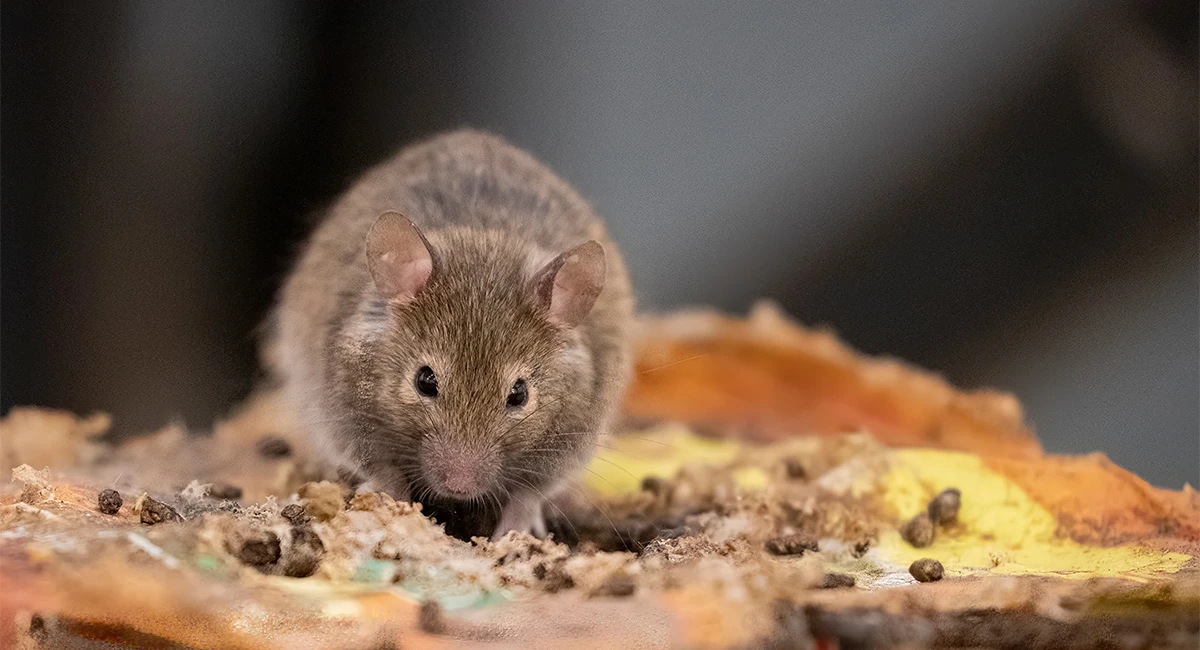
Mouse entry into structures begins with openings or deficiencies that are a quarter inch or larger. Seems impossible since the average body girth of a mouse is larger than an inch. While it is true that their body size is much bigger than a quarter of an inch, the only part that matters when entering an opening is their head, more precisely, their skull. Once mice squeeze their heads through an opening, the rest of the act is akin to Harry Houdini’s body contortions and illusions.
Wild mice including the white footed and deer mouse species (both host species of Lyme disease) are the two common rodent home invaders in the New England Region. While these mice spend most of their days living in the great outdoors, they will seek harborage and resources within buildings and homes during times of food shortages or extreme cold weather. Since these mice are living near structures that are bordered by the woods, it isn’t a great effort for them to seek resources and shelter within nearby buildings.
When given the option, these pesky mice will enter buildings through large access points. One of the easiest entry points to homes is through open garage doors. Many people leave their garage doors open when they are at home, and this practice becomes more inviting to mice during the colder months of the year. Mice and other wildlife can waltz right in and help themselves to available resources. If there are no resources present in the garage, they will begin to seek or create access ways that lead from the garage into the main living areas, the attic, the basement, or the crawlspace. They achieve this interior invasion primarily by using electrical and plumbing penetrations that lead from one part of a building to another.
Once in, mice will establish well-defined highways that lead to all their desired resources, escape routes, and to their nesting site. These highways will be marked with evidence, but to the untrained eye, it typically goes without discovery. Here is a list of mouse/rodent infestation evidence:
- Gnaw Marks: These tooth-shaped gnaw marks are evidence that a rodent has either chewed its way in, widened a preexisting access, or is maintaining their teeth on a hard material.
- Droppings: Mouse droppings/fecal pellets are small, dark-colored scats/poop that are pointed on both ends. Sometimes mistaken for black-thistle seeds used to feed finches.
- Grease/Rub Marks: Rodents have glands that secret an oily substance known as sebum that presents like a brown greasy rub mark on the surfaces where mice travel. High concentrations of sebum marks are usually near access openings. These grease marks can be up at the ceiling level or along the floor level. Mice use these pheromone-scented grease marks to communicate everything about their intentions.
- Chewed Boxes of Stored Food Containers: Check the pantry and other areas where food (human, pet, and wild bird feeds) is stored. Mice will raid boxed and bagged food sources and consume all or some of the edibles while contaminating the rest with fecal droppings and urine. Discard all mouse compromised food; it is not safe to consume due to diseases associated with rodents. Always store dried foods in metal or glass containers to protect them from mice. Mice can chew through any material softer than their teeth to gain access to resources.
- Chewed/Shredded Paper or Cloth Materials: When you find this evidence, it is usually associated with female mice harvesting materials to build a nest for their soon to be born pups.
- Nest: Mice have no issues living in the same house with people and pets, but they like to stay behind the scenes, especially where they build their nest. Many times, their nests are secluded from discovery within wall voids or other tight, hard-to-reach spots to keep them and their young protected from predators. Often, people will discover active or abandoned nests in or behind stored materials including boxes, building supplies, dormant fireplaces, infrequently used furniture, stored automobiles, etc.
- Caches of Food: Mice are hoarders. Coming across a random pile of seeds, nuts, acorns, popcorn, and many other food materials are sure signs that rodents are living in your home.
- Decaying Carcasses/Dead Mouse: Finding a dead or decaying mouse anywhere within your home isn’t a case of ‘problem solved’ as much as it is an indicator that mice have access to the building. Additionally, the condition is most likely mice and not a single mouse. While a single mouse could be introduced into a home and quickly eliminated by trapping it, we rarely get this lucky. Finding a single mouse is the tip of an iceberg and others are sure to be present and will quickly multiply into an infestation scenario.
A mouse infestation is a destructive and upsetting condition to experience. Because mice are so cryptic and do most of their work while we sleep, early evidence is easily dismissed or missed completely. When mice go undetected for a short time, their population expands quickly, and before you realize, your home is overrun with them.
At JP Pest Services, our Service Specialist are highly trained professionals who know what evidence to seek that will lead them to places where mice nest, hide, eat, and travel. The key to a successful rodent control program is to identify where mice are gaining access to the building and how they travel once inside.
JP’s rodent experts utilize an IPM (Integrated Pest Management) approach to rodent control where they concentrate their efforts on excluding new rodents from gaining access, trap and monitor mice within the home, use rodent baits only where and when it makes sense to do so, and follow up with inspections and exclusion work to keep rodents from reentering your home after the initial infestation has been eliminated.
Book Your Free Pest Inspection Today
Our local technicians will assess your property and recommend tailored solutions. Fast, friendly, and completely obligation-free.
- Safe, targeted treatments
- Local experts, fast response
- Trusted, trained technicians