© 2026 Rentokil Initial plc © JP Pest Services. All Rights Reserved.
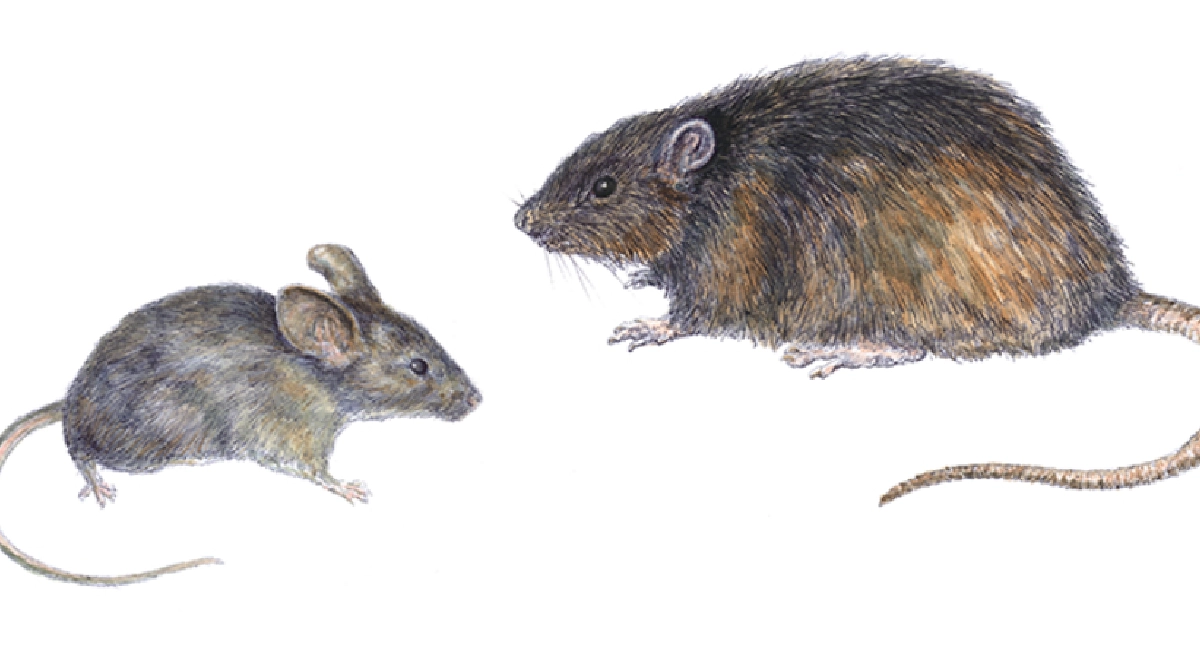
Key Differences
- Size: Rats are significantly larger than mice in size; some rats grow up to 9.5 inches in length, and can weigh up to 18 oz, whereas a house mouse usually grows to no more than 4 inches in length, and can weigh under 1 oz.
- Features: Mice have large, prominent ears and a pointed, triangular snout, whereas rats have smaller, hairier ears and a blunter, more rounded nose.
- Behavior: Mice are curious and bold, so they can be easier to catch in traps, while rats are cautious and wary.
- Droppings: Rat droppings are large, spindle or pellet-shaped, whilst mouse droppings are tiny, like grains of rice.
When it comes to figuring out whether it’s mice or rats running wild in your home, there are a few key signs that can alert you to exactly which rodent invader you might have on your hands. Knowing which type of rodent has made its way into your walls is a crucial step in keeping them out. Here’s a look at some of the major differences between the two, and what you can do to keep both from leaving unwanted damage around your home.
Difference Between Mice and Rats
Though they share a lot in common, mice and rats are actually pretty unique from each other.
Size
The most obvious difference between mice and rats is their size.
Mice are especially crafty scavengers precisely because they are so small. The common house mouse usually grows to no more than 4 inches in length and can weigh under 1 oz. when fully grown. This allows mice to hide easily, slip through incredibly small cracks and openings, and generally stay as far out of the way as possible.
Rats are significantly larger. The most common rat in New England, the Norway rat, can reach up to 9.5 inches in length and can weigh up to 18 oz when fully grown.
Appearance
If the sheer size difference between rats and mice isn’t enough to indicate which is present in your home, closer inspection of each rodent’s physical appearance can help.
Mice tend to have small proportions across their entire body:
- A small head and feet
- Large ears
- A pointed snout
- A small, fuzzy tail

Rats are significantly more stout than mice from tip to tail, with:
- A shorter snout
- Thick bodies
- Small, thin ears
- Hairless tails

Signs
While some signs of rodent activity are similar, such as scratching sounds coming from inside walls, there are differences that tell rats and mice apart.
Droppings
- Mouse droppings: Found around nesting areas and food storage areas. Usually small and shaped like rods or grains of rice.
- Rat droppings: Can be distinguished by their long, larger, capsule-shaped droppings.
Gnawing and Scratch Marks
Rats are larger and have stronger jaws and more pronounced teeth than mice. Their gnaw marks appear as rough, jagged grooves about 4mm wide. A brown rat can chew through incredibly tough materials, including wood, plastic, soft metals like lead, and even cinder blocks, leaving behind large holes with ragged edges.
House mice leave much smaller, finer scratching or nibbling marks. Their gnaw marks are typically only 1–2mm wide and look like small nibbles rather than deep gouges. You will usually find mouse damage on softer items like cardboard food packaging, plastic bags, or thin wooden trim.
Grease Marks
Rats, being larger and heavier, tend to leave dark, greasy fur marks as they travel along baseboards and other surfaces. Mice also leave these marks, but they are much lighter and less oily.
Mouse Hole vs Rat Hole
Rodents use their teeth to widen small entry points and travel between these and their nests. You can usually tell from the size of the opening whether it is a mouse hole or a rat hole.
Mouse holes:
- Are usually small, neat, and tucked into a tiny corner or a narrow gap
- Frequently found indoors near food sources or nesting sites in wall voids
Rat holes:
- Substantially larger, typically at least 40mm to 50mm in diameter
- "Pop holes" or burrows
- Usually found outside, near foundation walls, under sheds, or around drainage systems
- Roof rats make gaps in eaves, roof vents, or through wooden soffits
Behavior
Both rats and mice enter homes looking for the same key resources: space to nest, food, water, and shelter from the elements. But their individual behavior in finding these resources can differ significantly.
Mice:
- Significantly bolder than their larger cousins
- Their small size allows them to hide and sneak more easily
- Will surface to search for food
- More likely to fall for traps, bait, and other rodent removal efforts
Rats:
- Neophobic, avoid anything new or unknown, and cautious when exploring new areas
- Their large size makes them less likely to take chances and surface
- Strong swimmers, and can enter a building through a broken toilet or waterway
- Less likely to fall for traps
Nest
Mice and rats nest close to a reliable food source, but their nesting behaviors are different.
Mouse nests
- Made as close to the food source as possible
- Small nests made of paper and other scraps
- Can be found where warmth and easy access to food are available (within walls or in the backs of rarely-traveled closets)
Rat nests
- Rats usually nest slightly farther away from any danger source
- Nest in burrows underground
How To Get Rid of Rats & Mice
Now you know how to tell if you have rats or mice, the next step may require some professional help.
Keeping your home free from rodents is critical to the safety and health of your family or household members. That’s why our experienced rodent removal specialists can help create a customized plan, whether that’s helping you get rid of mice and rats or implementing preventive measures. Contact our team to discuss pest control for rats and mice.
Frequently Asked Questions
Mice and rats do carry some of the same rodent-borne diseases through their droppings and urine, such as Salmonella. But there are notable differences in the pathogens each species is more likely to transmit.
House mice are primary carriers of hantavirus, which can cause severe respiratory illness in humans, as well as lymphocytic choriomeningitis virus (LCMV) and certain strains of Salmonella. Brown rats are more commonly associated with leptospirosis (Weil’s disease), which affects the kidneys and liver in humans. Historically, rats have been linked to the transmission of plague through fleas.
A single pair of house mice can rapidly escalate into a serious infestation because of their fast breeding cycle. A female mouse can produce 5-10 litters per year, with each litter containing 6-12 pups. Young mice reach maturity in as little as 6-8 weeks, meaning a population can double or triple every month under ideal conditions with access to food and shelter.
Rats breed slightly more slowly but can still multiply at an alarming rate, with females capable of having 4-6 litters annually and larger litter sizes. Within three to four months, what started as a couple of rodents can easily become dozens or even hundreds.
DIY traps and baits often fail to eliminate an entire rodent colony because they only address a small portion of the population. Rodents are highly intelligent and quickly learn to avoid new objects, such as traps, after seeing others get caught. This leaves the more cautious members of the colony untouched and able to continue breeding.
No, rats and mice cannot cross-breed to produce hybrids. They belong to entirely different genera—rats are in the genus Rattus, while mice are in the genus. Their genetic differences make reproduction impossible.
Book Your Free Rodent Inspection Today
Our local technicians will assess your property and recommend tailored solutions. Fast, friendly, and completely obligation-free.
- Safe, targeted treatments
- Local experts, fast response
- Trusted, trained technicians