© 2026 Rentokil Initial plc © JP Pest Services. All Rights Reserved.
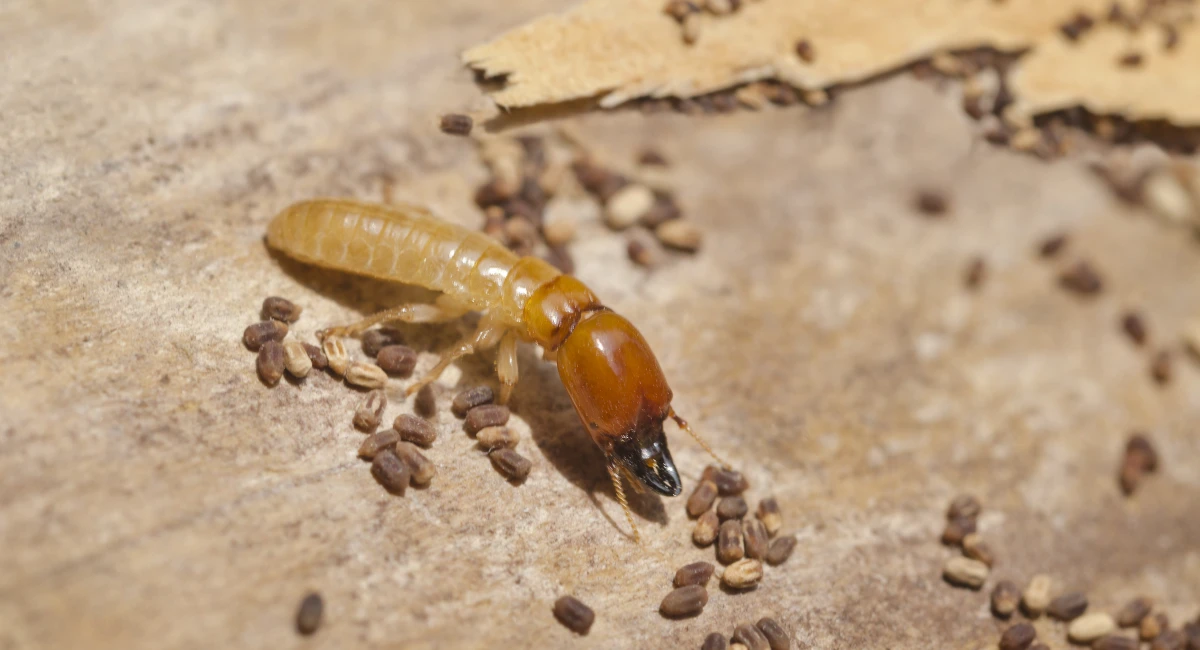
Termites are no joke for homeowners. Destructive, hard to spot, and prolific when it comes to reproduction, termites can cause serious damage to your home or property before they’re even noticed - and once the damage is done, only a total overhaul of the affected area can get your house back in shape.
In short, a termite infestation can be both pricey and frustrating - but with the skills to nip it in the bud early, you can save on repair bills and spare your home the heartache to begin with.
Here’s a look at what to do about termites, and how you can keep the damage to a minimum before getting rid of them completely - because nobody likes paying to make their home into a feast for termites.
Short Term Damage
If your property is facing a termite infestation, chances are you’ll notice a few warning signs before the main damage becomes apparent. Damage caused by common types of termites, including the eastern subterranean termite, generally happens from the inside out. Termites enter your home through cracks in the floor or foundation, or build shelter tubes from the ground - even over concrete - to access wood in a dark, damp place.
Some of the more common signs of termite damage can be tough to spot, and may take a trained eye to accurately assess. Some of the most common warning signs can be:
- Pin-size holes in drywall with mud over them,
- Mud tunnels or shelter tubes on foundations,
- Partial mud tubes dropping down from infested wood,
- Jammed doors or windows,
- Damaged wooden objects, cardboard boxes or paper located over a crack in the floor,
- A hollow sound if wood is tapped.
This damage can cause immediate dangers, especially when they’ve weakened the support capabilities of your home’s inner skeleton. That, combined with the high cost of repair, make termites one of the most destructive pests faced by homeowners - and the damage done can stick with a house for years afterward.
Long Term Worries
Ask any home buyer if they’d be comfortable purchasing a property with a history of termites and you’ll probably get the same rejection time and time again. Termite damage is usually rooted deep within a house’s inner workings, and repairs can be extensive and costly.
Typically, the termite removal process is two-fold: removal of the termites themselves by a pest professional, which can be relatively simple and cost-effective; and repairs to damaged areas, which often extends to any wood that had contact with termites and can involve a seriously costly gutting of your home’s inner structure.
On top of that, your home will likely lose a bit of resale value as a result of a termite infestation, as buyers are likely to be scared off by what they perceive as a threat to the home’s structural security. Termite damage will likely leave a mark on your house that’s not so easily repaired away, and it’s best to prevent the damage from ever getting so bad in the first place.
Termites Make Bad House Guests
For many homeowners, a termite problem becomes apparent only after damage has been discovered, during remodeling, or when termites begin to swarm. When a colony reaches a large enough size to permit reproduction and weather conditions are right for flight, flying termites called “alates” will begin to swarm in mid-air (usually outdoors on warm days directly following rainfall). After the swarm is over, most will simply drop out of the sky and die, regardless of where they may be at the time.
A termite swarm is a brief, annual mating ritual that most homeowners will not witness - although occasionally, the swarm can occur indoors. In this case, you could find yourself having to clean up hundreds or even thousands of dead swarmers - a nasty job, and certainly one that no homeowner wants to deal with. This can be a terrible way to discover your property has a termite problem, and if you begin to notice swarmer activity in or around your home, it’s probably well past time to get in contact with a pest professional to take care of the problem.
March is the official kickoff to termite swarming season. As spring temperatures slowly rise, termite activity increases across the U.S.
April is the midway point of swarming season. The mild temperatures and often rainy conditions are ideal conditions for swarming activity. Parts of the Northeast begin seeing the most activity towards the end of the month. May is still an active month for swarmers, especially in the Northern parts of the U.S. Almost every state will be experiencing some termite activity at this point (with the exception of Alaska).
Don’t Let Termites Ruin Your Investment
Maybe you’ve noticed termite damage around your home already, or maybe you’re simply looking to head off an invasion before it gets started - whatever your motivation, termite prevention is always a smart idea for the concerned homeowner. If you’re ready to get your home termite-free, or to keep termites out for the long haul, JP Pest Services can help.
JP Pest Services uses the most effective termite control program available on the market today, The Sentricon System®. Our decades of termite control experience paired with top-of-the-line Sentricon products ensure your termite problems will be solved.
Our professionally trained Service Professionals will inspect in-ground control stations for Eastern Subterranean Termite activity on your property. The Sentricon products are spread throughout a colony from workers feeding on the “food source” contained inside the stations, resulting in colony elimination.
Protect your biggest investment, and contact JP Pest Services today for prompt identification and eradication of these destructive pests - it may just be the best thing you ever do for your home.
Book Your Free Pest Inspection Today
Our local technicians will assess your property and recommend tailored solutions. Fast, friendly, and completely obligation-free.
- Safe, targeted treatments
- Local experts, fast response
- Trusted, trained technicians