© 2026 Rentokil Initial plc © JP Pest Services. All Rights Reserved.
For homeowners across New England, March is a deceptive month. The brutal cold of January and February finally eases, but this "shoulder season" quietly creates one of the biggest pest risks of the year.
The deep freezes are fading, replaced by persistent cold rain, melting snowpack, and fluctuating humidity. The ground becomes saturated. Homes turn damp. And that's exactly when trouble starts.
March moisture doesn't just mean a musty basement. It seeps into foundation cracks left by winter frost heaves, settles in clogged gutters, and softens wooden siding and framing. For termites, carpenter ants, silverfish, and rodents, all that dampness is a homing beacon: a signal that your home is open for business.
Why March Moisture Is So Dangerous
What's Happening Underground
As the frost line recedes, frozen earth releases a massive volume of water. Add March's cold rain, in what is typically New England's wettest month, and you've got a problem. Deeper soil layers are often still frozen, so water pools against your foundation, building hydrostatic (load) pressure that forces it through even the tiniest cracks.
If your home experienced frost heaves over winter, you likely have fresh fissures that serve as direct pathways for water. Once inside, that moisture raises humidity in your basement or crawlspace and wicks upward into your wood framing.

What's Happening to Your Wood
Wood constantly absorbs and releases moisture to match its environment. In March's damp air, your framing swells and softens. When moisture content exceeds 20%, wood becomes a host for decay fungi that break down its structural strength, leaving framing that looks fine on the surface but is rotting from within.
That softened, fungus-friendly wood is exactly what New England's worst pests are searching for.
The Pests That Follow the Moisture
Pests don't show up randomly. Many insects have chemoreceptors that detect humidity gradients and even the chemical byproducts of wood decay, allowing them to essentially smell a damp house.
- Termites: New England's eastern subterranean termite requires constant soil moisture to survive. When March saturates the ground around your foundation, termites tunnel closer without drying out. If moisture wicks into your sill plate (the bottom-most wood resting on the foundation), it transitions seamlessly from soil to structure. Damp wood is softer and easier to chew, making your home a high-value target. Look for pencil-sized mud tubes climbing your foundation walls.
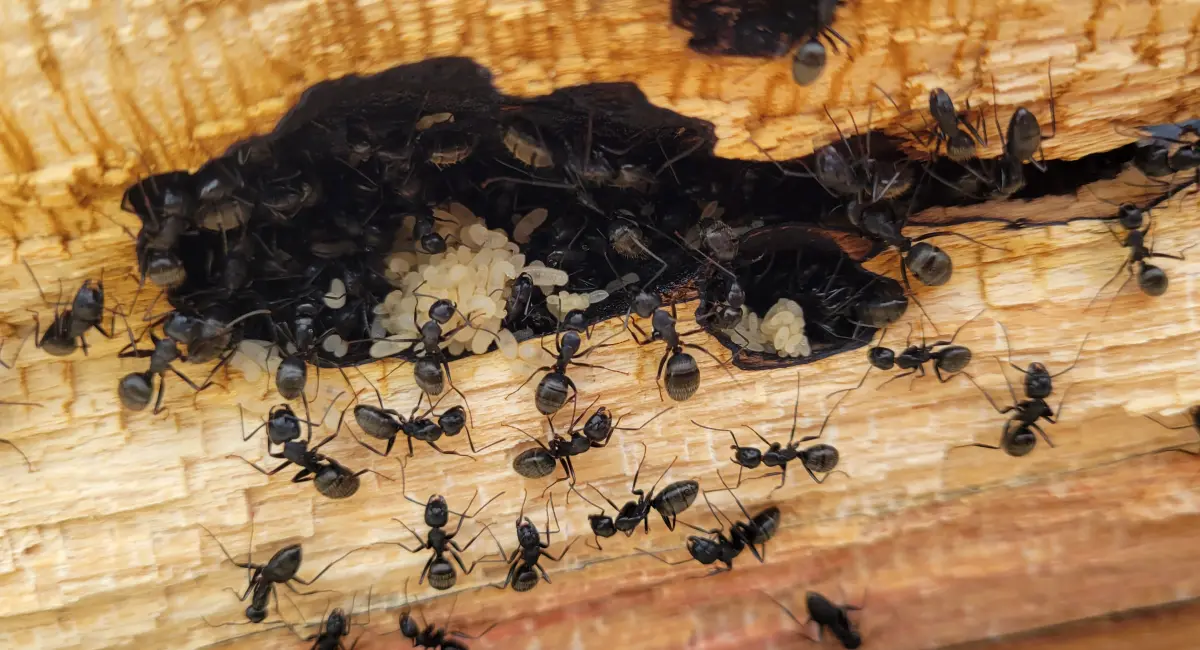
- Carpenter Ants: Unlike termites, carpenter ants don't eat wood; they excavate it for nests. Dry lumber takes enormous effort to chew through. Water-damaged, softened wood? Easy. Damp areas around window frames, door jambs, or under overflowing gutters are a move-in-ready habitat. They establish colonies in rotted wood, then expand into sound wood, causing serious structural damage.
- Silverfish: Strictly moisture-dependent, silverfish can't survive in dry conditions. If you're seeing them, treat it as an early warning of a hidden moisture problem behind a wall.
- Rodents: As March snowmelt floods their burrows, mice and rats seek higher ground: your home. They sense heat leaking from foundation cracks and utility gaps, and they'll exploit water-damaged, rotted wood at corner posts and door frames as the easiest way inside.
Your March Exterior Defense Checklist
Don't wait for spring. Use this zone-by-zone checklist to harden your home now.
Zone 1: The Ground (0–6 Feet From Your Foundation)
- Check your grading. Soil should slope away from the foundation — at least 6 inches of drop over 10 feet. Frost heaves often reverse this, funnelling snowmelt against your walls. Fix it with fill dirt.
- Clear vegetation at least 2 feet from siding. Damp foliage creates a moisture bridge and an insect highway to your home.
- Manage mulch. Old mulch against siding holds moisture like a sponge. Maintain a 12-inch gravel gap between the foundation and organic mulch to discourage termites and ants.
- Inspect the foundation. Seal cracks with masonry caulk. Look for termite mud tubes; if you find them, call a professional immediately.
Zone 2: Walls, Windows, and Entry Points
- Check siding. Swelling or peeling paint at the bottom edge means trapped moisture. Probe with a screwdriver; if it sinks in, you've got rot.
- Re-caulk windows and doors. Winter cracks old caulking. Reseal gaps to block wind-driven rain.
- Seal utility penetrations. Gaps around pipes and conduits are prime entry points for rodents. Pack with steel wool first, then expanding foam; rodents chew through foam alone but won't touch steel wool.
Zone 3: Roof-to-Ground Water Management
- Inspect gutters. Ice dams may have bent or pulled them loose. Ensure they're tight, properly pitched, and cleared of debris.
- Extend downspouts at least 4–6 feet from the foundation. Dumping water at the base of your house feeds the hydrostatic pressure problem. Add extensions or splash blocks.
- Check soffit vents. Blocked vents trap moisture in the attic and contribute to ice dams if a late freeze hits.

If You Find Damp Wood
Don't wait for it to dry naturally; in a humid New England March, that rarely works. Here are some tips to prevent damp from forming:
- Dehumidify: Get the relative humidity below 50%. Opening a window won't help when outdoor air is just as damp.
- Measure: An inexpensive moisture meter tells you what your eyes can't. Aim for readings below 16–20%.
- Know when to call a pro: Minor trim rot can be treated with borate preservative and epoxy filler. But if a sill plate, joist, or load-bearing stud has lost significant integrity, it needs professional repair or replacement.
When to Call in the Professionals
The winter-to-spring shift in New England is a stress test for your home. Melting groundwater, cold rain, and saturated soil create conditions that attack your foundation and woodwork, drawing pests straight to the damage.
The DIY fixes in this checklist are straightforward and cheap compared to the alternative. Extending a downspout or re-caulking a window costs almost nothing next to replacing a rotted sill plate or treating a termite colony in May. But if your inspection turns up mud tubes, significant wood rot, or signs of active infestation, that's when professional help pays for itself.
Harden your defenses now. And if you're not sure what you're looking at, schedule a free inspection with JP Pest Services. We'd rather help you prevent a problem than treat one.
Book Your Free Pest Inspection Today
Our local technicians will assess your property and recommend tailored solutions. Fast, friendly, and completely obligation-free.
- Safe, targeted treatments
- Local experts, fast response
- Trusted, trained technicians