© 2026 Rentokil Initial plc © JP Pest Services. All Rights Reserved.
The blacklegged tick (Ixodes scapularis) doesn't wait for the start of summer to hunt. For much of New England, April is already tick season, and most homeowners are caught completely unprepared.
The reality is that tick season in the region starts far earlier than most people expect, long before the temperature hits the high 70s, and the kids are out of school. This common misconception leaves families exposed during the weeks when blacklegged ticks are already actively seeking a host.
According to the New Hampshire Department of Health and Human Services, ticks are active whenever the outside temperature is above 40°F and not covered by snow. Across much of Maine, New Hampshire, Vermont, Massachusetts, and Rhode Island, those conditions arrive well before May, often by early to mid-April. That means the window for early spring tick prevention is open right now.
Why April Matters More Than You Think
The blacklegged (deer) tick life cycle doesn't align with the seasonal calendar the way most homeowners assume. The adults that don't find a host before winter don't die off. They overwinter beneath leaf litter and emerge as soon as the ground thaws and temperatures rise above 40°F.
In a typical New England April, daytime temperatures regularly cross that line even while nights remain cold. This creates a deceptive pattern: the weather doesn't feel like "tick weather," but the ticks are already active, questing on low vegetation and waiting for a passing host.
For homeowners, this is the risk window that gets missed. Yard work hasn't started, the dog is running off-lead again, the kids are outside more, and nobody is doing tick checks yet.

Adults Now, Nymphs Next, and Nymphs Are the Greater Threat
April's tick activity is driven primarily by overwintered adults. These are the larger ticks (roughly the size of a sesame seed) that most people picture when they think of a tick. They're easier to spot during a tick check, and while they absolutely can transmit Lyme disease and other pathogens, their visibility works in your favor.
The greater concern is what follows. From late spring into summer, blacklegged tick nymphs become active. Nymphs are roughly the size of a poppy seed, making them small enough to attach and feed without being noticed. The New Hampshire DHHS notes that nymphs are most active from May through August and are the life stage most likely to transmit tick-borne diseases to humans.
This is why April preparation is so important. The steps you take now to reduce tick habitat on your property directly affect how many nymphs survive to become a threat in the weeks ahead. Waiting until June means the most dangerous stage of the tick life cycle is already well established in your yard.
New England's Tick-Borne Disease Risk Is Not Theoretical
New England is considered a major hotspot for Lyme disease by the Centers for Disease Control and Prevention (CDC), along with other Mid-Atlantic and upper-Midwest regions.
In New Hampshire alone, five tick-borne diseases are actively tracked: Lyme disease, anaplasmosis, babesiosis, Powassan virus, and Borrelia miyamotoi. All five are transmitted by the blacklegged tick. Nationally, the CDC estimates that approximately 476,000 people may contract Lyme disease each year in the United States, with the Northeast bearing a disproportionate share of that burden.
Powassan virus, while rarer, is particularly concerning. Unlike Lyme disease, which typically requires a tick to be attached for 24 hours or more before transmission occurs, Powassan can be transmitted in as little as 15 minutes. About 10% of Powassan encephalitis cases are fatal, and roughly half of survivors experience permanent neurological damage.
For New England homeowners, these aren't statistics to file away; they're reasons to act before peak season arrives.
How to Reduce Ticks in Your Yard This Week
You don't need to wait for a professional visit to start reducing tick habitat on your property. A focused yard audit in April can genuinely lower the tick population around your home before nymphs emerge. Here's where to start:
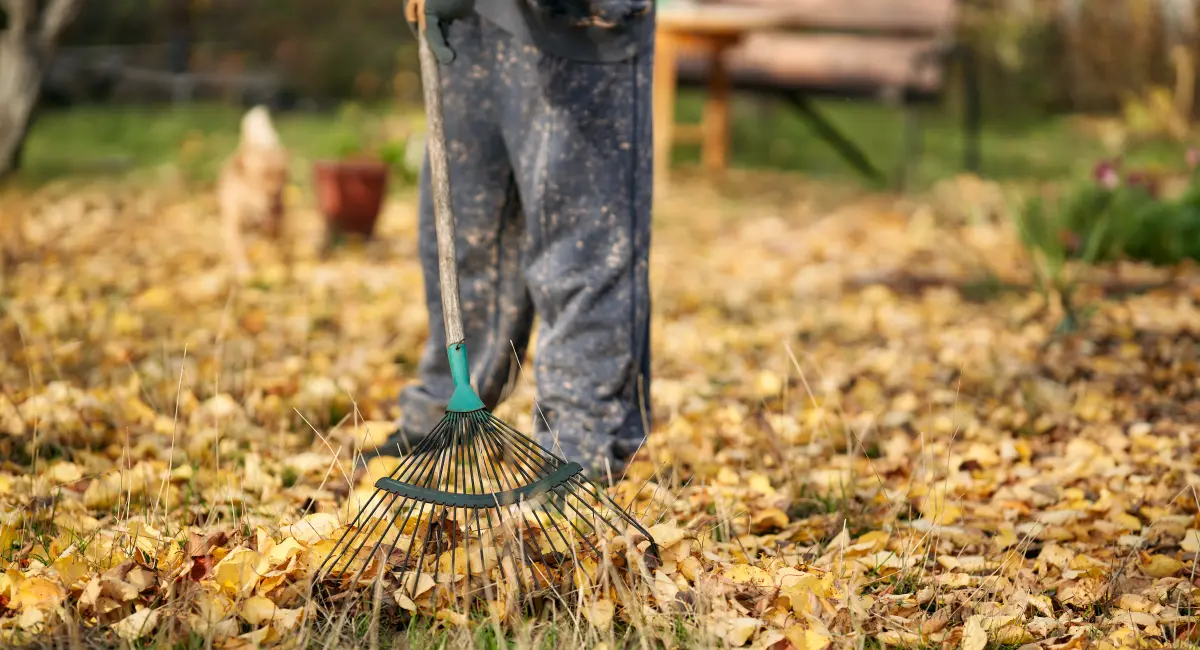
- Clear leaf litter and debris from the edges of your lawn, along fence lines, and around the foundation of your home. Ticks thrive in damp, shaded organic material—and last autumn's leaves are their primary overwintering habitat.
- Move woodpiles away from the house and elevate them off the ground where possible. Stacked firewood against or near the home attracts white-footed mice, which are primary hosts for the bacteria that cause Lyme disease. Where mice nest, ticks follow.
- Create a dry barrier between your lawn and any adjacent wooded or brushy areas. A three-foot-wide strip of wood chips, gravel, or dry mulch acts as a physical deterrent that ticks are unlikely to cross.
- Trim back overgrown vegetation and keep grass short, particularly in areas where your family spends time. Ticks seek out (or quest) the tips of grasses and low shrubs; reducing that vegetation reduces direct contact.
- Check outdoor furniture, play equipment, and pet areas for proximity to tick-friendly habitat. If your children's swing set backs onto an unmaintained tree line, that's a high-exposure zone worth addressing.
These actions target the conditions that allow tick populations to build momentum heading into summer. They're simple, but they make a measurable difference over the months ahead.
Personal Protection Still Matters
Yard management reduces the overall tick population on your property, but personal protective measures remain essential, especially during the transition months when tick activity is ramping up, and awareness is still low.
The New Hampshire DHHS recommends wearing light-coloured clothing that covers arms and legs, applying insect repellent with 20–30% DEET to exposed skin, and treating clothing with permethrin for added protection. After spending time outdoors, shower promptly and perform thorough tick checks, paying particular attention to warm areas like behind the knees, around the ears, the groin, and the back of the neck.
Don't forget your pets. Dogs are highly susceptible to tick bites and tick-borne diseases, and they can carry unattached ticks into your home. Daily tick checks are an important part of household prevention.
Early Action Sets the Tone for the Entire Season
Tick management is a seasonal commitment because what you do in April shapes your family's exposure risk throughout the summer and into autumn. JP Pest Services offers a season-long tick control program that creates a protective barrier across your property, targeting the perimeter vegetation, overgrown areas, and yard borders where ticks are commonly found between feeds.
For homeowners looking for broader, year-round coverage, the Home Protection Plan provides consistent, scheduled protection that adapts to the pests most active at each stage of the year, including targeted support during the critical spring tick window.
If you're unsure whether your property is prepared for the season ahead, a free inspection is a practical place to start. Understanding your yard's specific risk factors now puts you in a stronger position for the months to come.
If you need a professional to assess your risk level before tick season arrives, schedule your free inspection today, and we'll make sure your property and family are protected against unwelcome guests.
Book Your Free Pest Inspection Today
Our local technicians will assess your property and recommend tailored solutions. Fast, friendly, and completely obligation-free.
- Safe, targeted treatments
- Local experts, fast response
- Trusted, trained technicians