© 2026 Rentokil Initial plc © JP Pest Services. All Rights Reserved.
Ants are tiny, but an infestation can quickly escalate into a major issue. When ants find food or water, they create scent trails that attract more ants inside. In New England homes and businesses, ant activity often spreads from the kitchen into bathrooms, walls, and even wooden support beams. This is when expert ant pest control is essential.
JP Pest Services provides reliable ant extermination and ant removal services for homeowners facing stubborn ant problems on their property. Our technicians identify the ant species, locate nests, and apply targeted treatments to eliminate colonies at their source. The goal is long-term control, not temporary relief, so your property stays comfortable and protected.
When Ants March In, JP Marches Them Out
No matter the species, ants are highly invasive and capable of establishing large, hard-to-reach colonies inside walls, beneath floors, and around foundations. Without professional ant control, colonies can continue expanding unnoticed for months.
Ants are one of the most common pest issues affecting New England residents, especially where moisture, food storage, or structural gaps are present.
Each behaves differently and requires a tailored treatment approach. Carpenter ants and pavement ants remain active year-round, given the right conditions, while odorous house ants typically slow down during colder months.
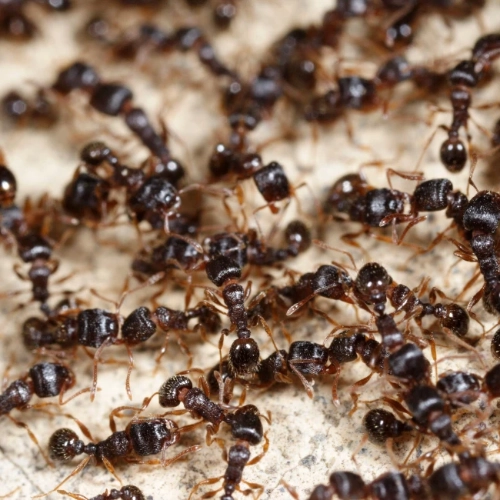
Signs You Need Professional Ant Removal Services
Ants may be small, but in New England, they are a destructive, year-round problem. Whether it's pavement ants trailing through kitchens and pantries or carpenter ants damaging damp wood beams, infestations can escalate quickly without professional intervention.
Check around doors and windows, utility pipes, and cable chases for signs of carpenter ants. Odorous house ants are drawn to humid areas like hot water pipes, heaters and leaky faucets, while pavement ants nest inside wall voids, insulation, or beneath flooring.
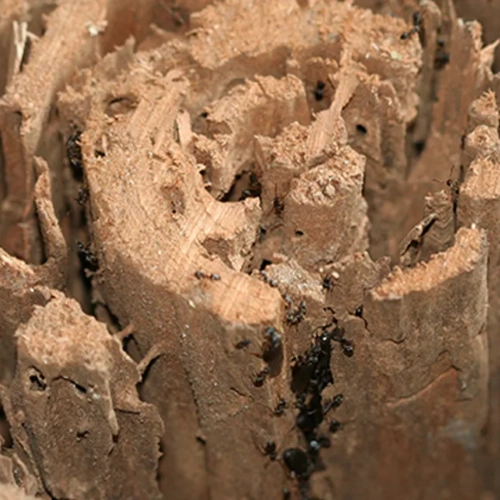
Outdoors, carpenter ants are commonly found in hardwood trees, stumps, or landscaping timbers before spreading indoors. Although carpenter ants do not eat wood, they excavate it to build nests, which can weaken structural components.
If you notice consistent ant trails, wood damage, or recurring activity despite cleaning, it’s time to contact a professional ant exterminator rather than relying on short-term fixes.
Dangers of Ant infestations in Your Home
An ant infestation is more than just annoying. Ant colonies grow rapidly, making them difficult to eliminate once established. Spotting a few ants often indicates a much larger nest hidden nearby, behind walls, under floorboards, or outside.
Large numbers of ants can also be a health risk. Some ants can contaminate food preparation areas and surfaces after traveling through unsanitary areas, while others, like carpenter ants, may contribute to structural damage that worsens over time as they expand their nesting galleries.
Some ant species may bite or sting if disturbed, which can be an additional concern for households with children or pets. If a bite or sting occurs, contact a healthcare professional. Tackling the infestation early can help lower these risks and keep your home safe.
Expert Ant Control with JP Pest Services
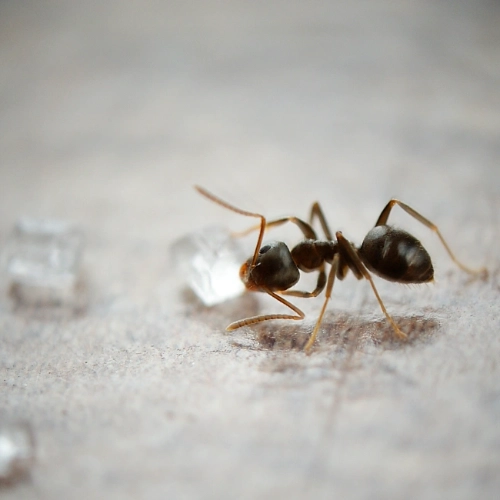
Backed by decades of experience JP Pest Services delivers professional ant control solutions for homeowners across New England, from Manchester and Berlin to Hanover and Meredith. Our approach focuses on locating and eliminating the nest, not just treating visible ants.
Our technicians understand ant behavior, seasonal patterns, and entry pathways. By targeting colonies at their source and eliminating contributing factors, we help prevent repeat infestations and protect your property long-term.
Seeing Ants?
Call now to book your free inspection.
See What People Are Saying
What to Expect from Our Ant Exterminator Service
Our ant removal services follow a two-pronged, colony-focused approach to ant control that leverages their natural foraging behavior. By applying slow-acting baits and targeted treatments, ants carry control materials back to the nest, where the colony is gradually eliminated. This method avoids scattering ants and provides more durable results than surface sprays alone.
Comprehensive Inspection
We assess the full extent of the infestation and identify the species. Entry points, moisture levels, and food sources are evaluated to create a plan of action.
Targeted Treatment
We use professional-grade baits and treatments that target visible ants and eliminate the colony at its source for lasting control.
Follow-ups and Prevention
After initial treatment, we monitor your property and apply additional preventative measures. Ongoing inspection and documentation help ensure ants don’t return.
Ant Identification Library
Carpenter Ant
Carpenter ants get their name because they excavate through wood in order to build their nests. They do not eat wood, but forage for sweet and protein-rich foods to maintain and grow their colonies.
Season: Spring, Summer, Autumn, Winter
Size: 1/4” – 3 /4”
Region: Throughout the U.S. but more common in the North
Pavement Ant
Pavement ants get their name because they make their nests in or under concrete slabs, bricks, or pavement blocks. These ants form large, multi-queened colonies that can infest structures and are challenging to control.
Season: Spring, Summer, Autumn, Winter
Size: 1/8” or less
Region: Throughout U.S.
Odorous House Ant
The odorous house ant gets its name from the strong, rotten coconut smell it gives off if crushed. These tiny dark brown ants are less than 1/8″ long.
Season: Spring, Summer, Autumn
Size: 1/8” or less
Region: Throughout the U.S.
Frequently Asked Questions about Ant Control
The most effective approach combines accurate identification, targeted treatment, and addressing conditions that attract ants, such as food and moisture. Professional treatments are designed to reach the nest and help prevent repeat activity.
An untreated infestation can spread quickly, contaminate food, and allow ants to nest in walls, floors, or wood. Some species can also contribute to structural concerns or persistent indoor activity over time.
The best way to identify an ant is to examine its size, color, behavior, nesting location, and where it is found in the home. For confirmation, a professional inspection can accurately identify the species and rule out hidden nests.
Results often begin within days, though full control can take longer depending on the species and nest location. Follow-up visits may be needed to help manage ongoing activity and reduce the chance of return.