1-800-222-2908 Call Now Book a Free Consultation

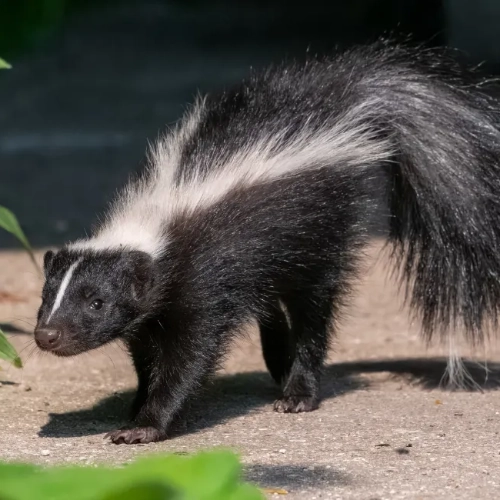
Unmistakable and instantly recognizable, the pungent aroma of  a skunk can strike a stressful note in the hearts and heads of homeowners throughout Massachusetts, Maine, or Rhode Island. At a glance, their black and white coat might resemble a raccoon, but the odor is a clear giveaway.

Skunks are disruptive, tearing up lawns for grub, getting into pet food, and clashing with household pets. More than just a nuisance, the striped skunk is the second most common wild carrier of rabies in the U.S., which means they are a serious health risk to both people and animals across New England.

Residential Skunk Control

Skunks are nocturnal creatures that can go undetected due to their nighttime activity. Consequently, structural damage to single-family homes or multi-unit dwellings can become extensive before anyone realizes it. Drawn to properties with abundant food sources, they’ll dig holes in yards, porches, decks, and sheds to create dens.

If you're facing a skunk problem, JP Pest Services offers reliable skunk control in New England to help manage and prevent conflicts and escalating costs. Our team uses safe trapping methods and habitat modification to make your property less attractive to skunks. We evaluate your situation, then apply a plan that addresses both current activity and long-term prevention. Whether skunk removal or blocking off den sites, our solutions are fit for purpose.

Contact Us to Schedule a Free Inspection Today!

If you have a problem with skunks on your property, we can help you out. Call us today to discuss your needs and get a free quote.

* Required field

Download this report

What can we help you with today? *
Are you a *

Signs of Skunks on My Property

Not sure if skunks are nearby? These are some signs to look for:

  • Torn-up turf from digging for grub
  • A faint or strong musky odor
  • Pet food disappearing overnight
  • Tracks around decks, sheds, or window wells
  • Visual sightings late at night

These signs point to active skunks. Don’t wait for a direct contact; call in a skunk control service early.

What Brings Skunks to the Neighborhood

Skunks are naturally introverted and will try to avoid human interactions wherever possible. However, they don’t discriminate and will seek shelter anywhere that will ensure their survival.

Their natural habitat includes woodlands, fields, and wetlands, but they are highly adaptable and thrive in New England suburbs and urban areas. As with any pest, they’ll enter built-up neighborhoods without hesitation to find suitable shelter and food sources.

They make a beeline for porches, woodpiles, and sheds, taking over abandoned burrows from other animals like woodchucks. Your property is more likely to appeal to skunks if it has an outdoor water source, which attracts prey that will help to support their expanding family.

Dangers of Having Skunks on your Property

Skunks are relatively harmless but still a concern for homeowners. They’ll dig up your yard and destroy your vegetable patch. They can be aggressive if they are provoked, feel cornered, or believe their young (kits) are in danger. They’ll spray the perceived threat to defend themselves, creating a foul, lingering smell that may irritate the skin and induce an allergic reaction. It can also stain porous materials like decks, soil, or upholstery.

Handling them without proper training is unsafe due to the risk of possible disease transmission, making DIY removal a dangerous and unreliable option.

In New England, removal methods must comply with specific state and federal laws. For example, in Massachusetts and New Hampshire, it is often illegal to trap or relocate skunks without a proper license, and homeowners can face fines for doing so incorrectly. 

If a skunk gets inside your home, damage to insulation, wiring, or air ducts can add to the cost. Because of these risks, safe and legal skunk removal should always be handled by trained professionals. We also offer exclusion services to help prevent skunks from entering in the first place.

Why Choose JP Pest for Skunk Control Services

Our approach is proactive, combining removal and preventive measures. We make every effort to safely, effectively, and humanely extract the skunk from your property. We may relocate the offending animal back into the wild, depending on our expert assessment of its potential danger,  and in accordance with local regulations and approvals.

We don’t just remove the problem, we look at why it’s happening in the first place. Our technicians inspect your property for signs of nesting, food sources, and access points. From there, we’ll create a plan to help prevent skunks from coming back, using exclusion methods and habitat modifications tailored to your specific space.

Customer Reviews

Our Skunk Control Process

At JP Pest Services, our skunk control process involves ethical removal, with relocation considered on a case-by-case basis. Following removal, we guide you through preventive measures to deter skunks from foraging or sheltering on your property. Our program includes:

Inspection

We start with a detailed look at your property, identifying signs of pest activity, potential nesting areas, and conditions that may attract pests.

Removal

Our team uses humane, state-compliant methods to remove skunks and prevent their return. This includes identifying entry points, installing exclusion barriers, and applying proven deterrents in line with New England wildlife regulations.

Prevention & Support

We share recommendations to reduce future pest issues and can provide additional services as needed to help protect your home and property.


Don't Let Skunks Get Comfortable in Your Yard

Call 1-800-222-2908

Get A Free Estimate


JP Pest Library

Skunk

Skunks spend the majority of their life alone and only engage with each other to breed, but in New England, they are known to burrow together during the winter to stay warm.

Season: Spring, Summer, Autumn, Winter

Size: 16 – 37 in.

Region: Throughout North America

Related Articles

Frequently Asked Questions

If a skunk has made its way indoors, you may smell its strong odor coming from walls, vents, or crawlspaces. You might also hear movement or scratching sounds, especially at night, and notice droppings or damage to insulation.

The most serious risk is rabies, which skunks can carry. If sprayed, pets or humans can experience skin and eye irritation, and the smell can linger indoors. Skunks can also damage gardens, lawns, and structures while creating dens.

It’s risky and often not legal to remove skunks without proper permits. Skunks may spray when approached or become aggressive if they feel cornered. Always work with professionals trained in humane and legal skunk removal.

The best results come from combining humane trapping with habitat modification and exclusion techniques. Blocking access to den sites and removing attractants like pet food and garbage is key. DIY methods may only work in the short term and don't usually address the root cause.

To help prevent return visits, close off access to previous den areas, clear out brush piles, and secure all food sources, including compost, bird seed, and outdoor pet food. Professional technicians can also help with exclusion repairs and ongoing prevention plans.

We Provide Business Protection

Find Your Local Branch

Go

About Us

Protecting New England since 1925 with trusted pest solutions. Join our community-focused, expert team for worry-free results.