© 2026 Rentokil Initial plc © JP Pest Services. All Rights Reserved.
As summer melts into cooler autumn weather and New England residents retreat indoors, they may notice an unwelcome seasonal visitor joining them. The brown marmorated stink bug becomes especially visible in late summer and fall as it searches for hiding places to spend the winter.
Stink bugs are primarily nuisance pests indoors, but their tendency to cluster in huge numbers can cause alarm and frustration for homeowners and businesses, not to mention the odor they release when disturbed.
Understanding their seasonal behavior and taking preventive action can help keep these insects outside where they belong.
Why Stink Bugs Come Inside in the Fall
Brown marmorated stink bugs generally spend the warmer months outdoors, feeding on a wide variety of plants. As temperatures fall and daylight hours shorten, adult bugs begin seeking sheltered areas to get through the cooler seasons (also known as overwintering).
Buildings offer many potential hiding places, including:
- Gaps around windows and doors
- Openings beneath siding
- Attic and soffit vents
- Utility penetrations
- Cracks along foundations
- Spaces around chimneys
- Loading areas and overhead doors
Stink bugs are often first noticed congregating on the sunny sides of building exteriors. From there, they may sneak inside through surprisingly small openings and settle inside wall voids, attics, storage spaces, and other sheltered areas.
Once indoors, they typically remain inactive through much of the winter. However, fluctuations or sudden increases in indoor temperature may cause some to emerge early, which is why stink bugs may seem to suddenly appear near windows or light fixtures on a mild winter’s day.
How to Identify a Brown Marmorated Stink Bug
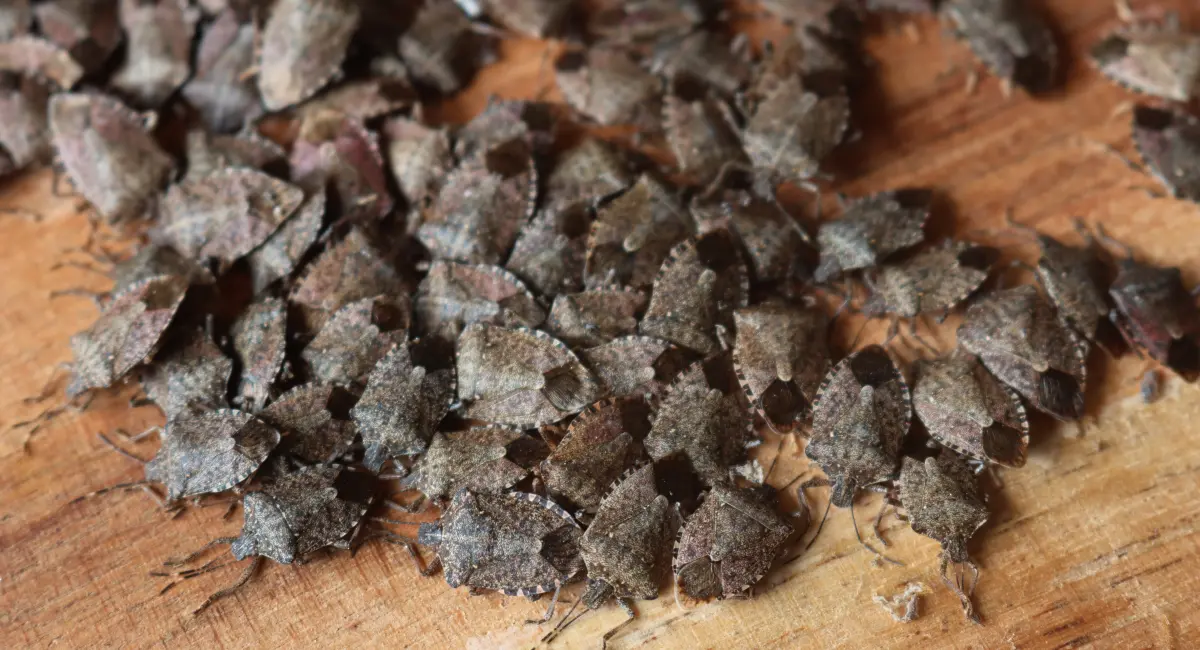
The brown marmorated stink bug has a distinct, broad, shield-shaped body and a mottled brown or gray appearance. It’s also recognizable for its alternating light and dark bands along the edges of its abdomen and on its antennae. Another identifier, and perhaps one of the most alarming, is the sheer quantity in which they often congregate.
There are some other similarly shaped insects native to the region, so it’s always useful to be sure of your identification before attempting to remove them. This is especially important in commercial environments where pest activity must be documented and addressed in accordance with established local protocols.
What to Do if You Find Stink Bugs Indoors
Although stink bugs can be disruptive and alarming in large numbers, they do not typically bite people, reproduce inside buildings, or damage structural materials. They can be more troublesome to your plants, though, as brown marmorated stink bugs feed on fruits, vegetables, and ornamental plants using their piercing-sucking mouthparts.
Stink Bugs in the Home
You should avoid crushing stink bugs whenever possible. Doing so may release their foul odor and can even stain some surfaces.
For an occasional stink bug encounter at home, you can:
- Carefully capture it in a container and release it outdoors
- Use a vacuum to remove it without direct handling (remember to empty the vacuum promptly into a sealed bag or outdoor waste container)
- Inspect the surrounding area for possible entry points
If you’re seeing large numbers of stink bugs indoors, it suggests they may have entered earlier in the season and are now emerging from their hidden overwintering spots.
Stink Bugs in Commercial Environments
Stink bugs can also create concerns in commercial properties. Warehouses, offices, food processing facilities, pharmaceutical environments, and other highly regulated operations may have numerous entry points associated with loading docks, utility penetrations, rooflines, and ventilation systems.
Although stink bugs are not generally associated with structural damage, their presence can affect employee comfort, product areas, audit readiness, and perceptions of facility care. A proactive program may include:
- Correct identification and documentation
- Seasonal exterior inspections
- Monitoring of recurring activity
- Recommendations for structural exclusion
- Coordination with sanitation and facility-maintenance programs
- Pest management strategies suited to the site’s regulatory needs
Addressing exterior vulnerabilities before peak fall activity can help reduce the likelihood of insects appearing in sensitive areas later in the year.
How to Help Prevent Stink Bugs
Treating individual bugs as they appear may provide short-term relief, but identifying how they entered is an important part of long-term prevention.
Exclusion to block them out is one of the most practical ways to reduce stink bug activity indoors. Ideally, repairs should be completed before stink bugs begin gathering on buildings in late summer and early fall.
Consider the following preventive measures:
- Seal exterior gaps: Inspect the areas around siding, utility lines, vents, pipes, chimneys, and foundations. Seal openings with materials appropriate for the location.
- Repair screens: Replace damaged windows, doors, attic, and ventilation screens.
- Check doors and windows: Install or replace weather stripping and door sweeps where daylight or gaps are visible.
- Inspect upper portions of the building: Stink bugs may enter through rooflines, soffits, fascia boards, and attic vents—not only through ground-level openings.
- Monitor sunny exterior walls: South and west-facing surfaces often attract stink bugs because they retain warmth later in the day.
- Address activity early: Preventive work is generally more effective before stink bugs have moved into protected areas for the winter.
Take care not to block any vents or other features needed for proper airflow. If you need help, a pest management professional can help distinguish between openings that should be sealed and those that require pest-resistant screening.
A Seasonal, Proactive Approach for Stink Bug Prevention in New England
Stink bug activity is closely connected to New England’s seasonal changes. Once these insects have crawled into walls and other hidden spaces, complete removal can be difficult. Prevention, monitoring, and timely exclusion play an important role in managing their presence.
We’ve helped protect the welfare of our neighbors across New England for over a century. Our team combines regional experience with industry-leading training, guided by degreed entomologists, to support responsible pest management for homes and businesses throughout New Hampshire, Massachusetts, and Vermont.
If stink bugs are gathering around your property or appearing indoors, our technicians can assess the activity, identify entry points, and recommend an approach to keep them from returning.
Book Your Free Pest Inspection Today
Our local technicians will assess your property and recommend tailored solutions. Fast, friendly, and completely obligation-free.
- Safe, targeted treatments
- Local experts, fast response
- Trusted, trained technicians