© 2026 Rentokil Initial plc © JP Pest Services. All Rights Reserved.
As fall approaches and temperatures drop, homes and businesses across New England start seeing brown marmorated stink bugs (BMSB) gathering in large numbers. This invasive species is a seasonal pest that enters properties through tiny gaps around windows, doors, utility pipes, and attic vents. Often appearing in their hundreds and emitting a foul odor, they are hard to ignore.
The stakes are high for retail stores, food and beverage processors, historic buildings, healthcare, and manufacturing facilities. Large clusters of stink bugs can make employees and customers feel uneasy, compromise sanitation standards, and reflect poorly on the brand image. Reliable, professional brown marmorated stink bug control can relieve the pressure and limit infestations using proven exclusion and prevention techniques.
Species: Halyomorpha halys
Season: Autumn
Size: 3/4 inches long
Region: Found in the eastern half of the U.S. as well as California, Oregon, Washington, Arizona, New Mexico and Texas
Threats: They don’t bite but emit a pungent odor and appear in vast numbers
Species
‘Stink bug’ is a broad term for shield‑shaped bugs that release an unpleasant odor when disturbed. The brown marmorated stink bug (BMSB) is an invasive species originally from Asia. It is believed to have arrived accidentally in shipping containers from China, having been traced back to an area around Beijing. First discovered in Pennsylvania in the late 1990s, the bug quickly spread throughout the mid-Atlantic states and began moving northward into New England, through Massachusetts, Connecticut, and then New York. By 2014, sightings were confirmed in New Hampshire, and it is now well-established throughout the region.
The brown marmorated stink bug is one of several stink bug species in New England. It competes for food and shelter with native species: the green stink bug, the dusky stink bug, and the brown stink bug. Unlike some native species like the green stink bug, dusty stink bug, or one-spotted stink bug, BMSBs are highly aggressive invaders of homes and businesses during the fall, making brown marmorated stink bug control a seasonal priority.
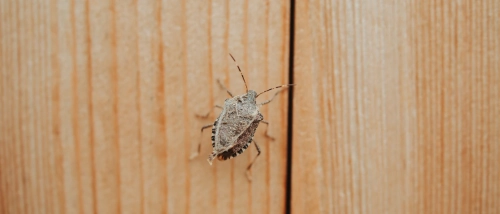
Appearance
Adult brown marmorated stink bugs are about ½ to ¾ inch long (roughly 14 to 19 mm). They are triangular in shape, typical of stink bugs. Their upper body is mottled brown (‘marmorated’), and their antennae and the edge of their abdomen display alternating light and dark bands.
Nymphs (immature stages) are smaller, wingless or partially winged, and often darker with varying red or orange on their bodies. Because of the distinctive banded antennae and shape, you can distinguish them from many common native stink bugs.
In a mass infestation, you might see them crawling or flying inside a building, clustering behind siding or around roofing vents, or resting along window ledges and door frames.
Habitat & Behavior
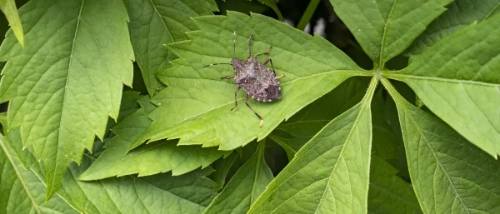
Brown marmorated stink bugs prefer the outdoors, feeding on fruits, vegetables, and ornamental plants. They use their piercing-sucking mouthparts to draw sap from leaves, stems, and fruit, sometimes damaging field crops and ornamental landscapes. This broad diet helps them thrive in both agricultural and suburban areas.
Stink bugs are thermo-positive, meaning they actively move toward warm surfaces as temperatures drop. They’re also phototactic, or drawn to light sources at dusk, which is why they cluster on siding, window frames, and porch lights in autumn. As they search for overwintering sites, they slip into homes through gaps in siding, soffits, and window casings.
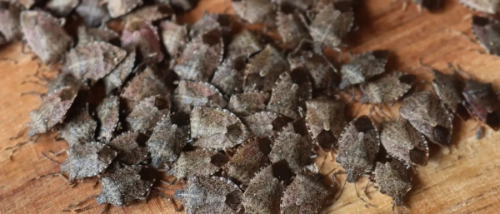
Once they find a suitable spot, stink bugs release aggregation pheromones, chemical signals that alert and attract other stink bugs to the same location. This collective behavior increases their survival rates and explains why large groups often appear seemingly overnight. While they remain inactive through winter in attics, wall voids, and crawl spaces, sunny days or indoor heat can trigger renewed movement, causing sudden indoor sightings.
Seasonality
As temperatures cool in late September and October, they look for shelter to provide protection and warmth over the winter. White paint and glass are magnets for stink bugs because they radiate heat. Once they’ve found a heat source, they’ll gradually migrate inside, using cracks or other structural faults to gain entry. They’ll exploit damaged siding, windows, doors, attic vents, utility pipes, and exhaust fans. When inside, they remain mostly inactive until spring, when they reemerge and head outside to resume feeding.
This overwintering behavior can lead to major infestations, especially in multi-unit buildings, warehouses, and older homes with multiple points of entry. These pests do not feed or reproduce indoors, but their presence can be alarming.
For commercial property managers, this seasonality means timing is critical: performing inspections, exclusion work, and treatment before the major influx of stink bugs gives better results than reacting once large infestations are established.
If you’re seeing stink bugs indoors, it’s often because a mass congregation has entered over the previous weeks and is now lying dormant or moving about.
Risks & Damage
The brown marmorated stink bug typically does not bite humans or cause structural damage like termites; however, its potential impact on properties and businesses should not be underestimated. Even a small amount of damage can be costly, inconvenient, and time-consuming to fix:
Stink bugs release a strong smell when crushed or disturbed. Their droppings can stain walls, curtains, and upholstered furniture. This attracts other pests into your property. They can also leave residue that transfers to surfaces, equipment, or stock if they cluster in large numbers, increasing cleaning needs and creating a poor customer impression.
Stink bugs crawl along ceilings, walls, and windows, which can be unnerving for occupants. For businesses, it can lead to staff complaints and affect customer trust. Their presence also indicates unsealed gaps that other pests, such as ants, flies, and even rodents, can exploit.
Congregations near loading bays, vents, or entryways can be disruptive and create sanitation risks. Ultimately, stink bug contamination may lead to rejected shipments or delays. Clusters around lighting, equipment, or HVAC intakes can interfere with daily routines and require repeated cleanup, a burden for audited commercial spaces.
Stink Bug Treatment & Extermination Services
JP Pest Services technicians have protected New England homes and businesses against stink bugs for over 90 years. We follow a proven path to locate, exclude, and treat seasonal stink bug invasions. Our process involves:
Inspection
Assessing your building inside and out to:
- Identify how stink bugs are entering
- Pinpoint areas of high activity and harborage
- Evaluate the surrounding vegetation and lighting that might attract stink bugs to the property
Treatment
Developing a tailored pest program.
- Apply treatments to block entry and common gathering areas
- Remove and replace damaged weather stripping or screens
- Use methods that help prevent re-entry without causing bugs to retreat deeper into walls
Aftercare
Follow-up visits and support, including:
- Advice on sealing, screening, and landscape management
- Seasonal monitoring and follow-up inspections for commercial clients
- Recommendations on maintenance to reduce long-term pest pressure
Stink Bug Prevention
Prevention is the foundation of any strong control plan. Store-bought sprays and home-made solutions can help reduce visible bugs, but for the best results, combine preventive maintenance with professional oversight. To start with, you can:
- Seal exterior gaps using caulk, mesh, or foam to close entry points in siding joints, exhaust fans, and utility pipes.
- Install or maintain weather‑stripping, door sweeps, and fine‑mesh screens on doors, windows, and vent openings.
- Trim tree branches, shrubs, and vegetation that act as ‘bridges’ for stink bugs migrating toward structures.
- Clear leaf litter, fallen fruit, or debris close to building perimeters; these attract host plants and support outdoor populations.
For commercial and high‑risk buildings, consider an annual inspection before the fall migration begins to identify vulnerable spots and avoid large‑scale entry.
Remember: professional intervention offers comprehensive solutions for long‑term control and protection.
Frequently Asked Questions
They are drawn to warm, sunlit surfaces in the fall and enter buildings through small cracks as they search for places to spend the winter.
They slip through tiny gaps, gather in hidden voids, migrate from surrounding outdoor areas, and often return year after year unless exclusion and monitoring are performed.
Though they don’t bite, they gather in large numbers, release a strong odor, and can damage crops. Indoors, they create mess, smell, and customer dissatisfaction.
The brown marmorated stink bug is a specific invasive species with a mottled brown color and banded antennae. It is more likely to enter homes and cause issues than native stink bug species.