© 2026 Rentokil Initial plc © JP Pest Services. All Rights Reserved.
Squirrels
Seen darting across lawns, scaling trees, or scurrying across rooftops in nearly every season, Squirrels are one of the most common wildlife in North America. Despite their acrobatics and playful energy make them fascinating to observe outdoors, squirrels can become destructive when they establish themselves inside homes or commercial buildings.
Understanding squirrel characteristics, seasonal habits, and the different types of squirrels found in New England is the first step toward recognizing when professional squirrel pest control may be necessary.
JP Pest Services has worked with homeowners and businesses across New England for decades, offering expert squirrel identification and control strategies for nuisance wildlife. Whether you are looking for squirrel information to learn more about these common animals, or seeking details on professional help for residential pest control or commercial pest solutions, our team provides the knowledge and support you need.
Types of Squirrels
North America is home to more than 200 squirrel species, but only a handful are commonly encountered in New England. Each species has unique traits that shape how they interact with human environments and helps identify them easily.
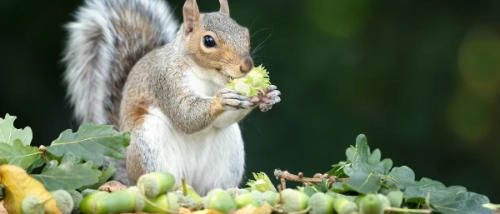
The eastern gray squirrel is common in the eastern United States. It has a gray coat, a lighter underbelly, and a bushy tail. This squirrel adapts well to different places, like rural woods and suburban areas. They’re also prolific foragers, often burying acorns and nuts to find later in winter.
Armed with skin to help them glide between trees, the northern flying squirrel is primarily nocturnal. Since they are nocturnal, people usually hear them in attics at night instead of seeing them during the day. While less common than gray squirrels, they can still become a nuisance, especially in wooded areas of New England.
Aggressive and smaller than their gray relatives, red squirrels have red fur and a loud chattering call that makes them easy to identify. They thrive in Massachusetts and New Hampshire, as they adapt well to both forests and suburban areas. Red squirrels can cause serious damage in homes quickly, making pest control for red squirrels a common need.

Squirrel Characteristics
Squirrels are part of the Sciuridae family, which also includes chipmunks, marmots, and prairie dogs. They have sharp incisors that grow continuously throughout their lives. This natural feature requires them to gnaw regularly, leading them to chew on wood, plastic, and electrical wiring when entering homes.
Most squirrels range in size from 10 to 20 inches long, not including their distinctive bushy tails. Their fur varies by species, from the silver-gray coats of Eastern gray squirrels to the reddish-brown hues of red squirrels. Keen eyesight, strong hind legs, and flexible ankles make them agile climbers, capable of leaping impressive distances between trees and rooftops.
Squirrel Behavior & Habits
You will see squirrels year-round, but their behaviors will differ each season. In warmer months, squirrels spend more time outdoors foraging for nuts, seeds, and fruits. As autumn arrives, their instinct to gather food intensifies, and they begin caching supplies to prepare for winter. Although squirrels do not truly hibernate, their activity decreases during cold months, and they rely heavily on stored food to survive.
Understanding how squirrels survive the winter is key to managing infestations. When temperatures drop, attics, chimneys, and wall voids become highly attractive nesting sites. Once inside, squirrels shred insulation to build nests, contaminate areas with droppings, and create scratching or scurrying noises that disrupt household peace.
Spring brings another shift, as squirrels often give birth to litters of young. A home not secured against entry can quickly become a nursery for a new generation. With two breeding seasons per year, infestations can expand rapidly if not addressed.
Types of Squirrels Found in North America
Across North America, there are dozens of squirrel species, all adapted to thrive in different habitats. In New England, three types are especially common: the Eastern gray squirrel, the Northern flying squirrel, and the red squirrel. These species share general characteristics but also display distinct behaviors that influence how they interact with people and properties. Understanding which species you are dealing with can make a difference in management strategies.
Squirrel Frequently Asked Questions
Squirrels spend much of their time foraging, caching food, and nesting. Gray and red squirrels are active during the day, but northern flying squirrels are active at night. This leads to different activity patterns.
In North America, there are more than 200 squirrel species. In New England, the most common ones are the Eastern gray squirrel, the Northern flying squirrel, and the red squirrel.
Squirrels forage heavily in autumn to prepare for winter, reduce activity in the cold months, and breed in spring and summer. These seasonal patterns influence when they are most likely to enter homes.