1-800-222-2908 Call Now Book a Free Consultation

Eastern Gray Squirrel

Request a Free Quote

Known scientifically as Sciurus carolinensis, the Eastern Gray is a highly adaptable rodent that thrives in different habitats, whether natural woodlands or human-dominated environments. Whether bounding across suburban lawns, nesting in tall oaks, or raiding backyard bird feeders, the gray squirrel is a constant presence throughout much of the eastern United States.

While fascinating to watch outdoors, they are notorious for nesting in attics, chewing on electrical wiring, and contaminating insulation with droppings. Understanding their habits, life cycle, and seasonal behaviors is essential for managing growing squirrel populations and protecting your property from damage.

Species: Sciurus carolinensis

Season: Spring, Summer, Autumn

Size: 9.1 – 12 in. body and 7.5 – 9.8 in. tail

Region: Throughout North America

Eastern Gray Squirrel Facts

Eastern Gray Squirrels are the most commonly seen variety here in New England. They belong to the Rodent family and spend most of their lives high up in trees. Gray squirrels prefer to live in wooded areas, but are commonly found in or near urban areas such as yards, gardens, and city parks (any areas having a decent amount of deciduous trees). 

Eastern Gray Squirrel habitats prefer living in White Oak, American Beech, American Elm, and Red Maple trees. Their breeding season can be twice per year, younger females sometimes will only have a single litter during the spring. Older females will breed for a second time during the summer if food is readily available. The life cycle of a typical Eastern Gray Squirrel usually lasts around five years. One of their greatest assets of the gray squirrel is their tail; they use it for balance, swimming, and protection from the elements. They are more active during early to mid-mornings and then again in the early evening. Their primary food sources are various nuts, tree bark, and insects, but often they score easier meals from birdfeeders, and homeowners gardens - flower bulbs and vegetables are a favorite.

Grey squirrel yawning

Eastern Gray Squirrel Life Cycle

Each part of the eastern gray squirrels life cycle is tied to seasons - breeding, nesting and food storage all depend on environmental conditions. These squirrels do not hibernate and are active all year-round, but their behaviors may change with the weather.

The breeding season for squirrels occurs twice annually, first in late winter (January through February) and again in midsummer (June through August). The average litter size for squirrels ranges from two to four offspring, though as many as eight can be born in favorable conditions. Baby squirrels are born hairless and blind, entirely dependent on the mother for the first several weeks.

Juveniles begin to leave the nest after about eight to ten weeks. At this point, they learn essential survival skills such as climbing, foraging, and caching food. By six months, young squirrels are fully independent. The American squirrel's lifespan averages six years in the wild. However, many do not survive past their first year due to predation or accidents. In urban areas, where natural predators are fewer, individuals can live longer, occasionally reaching over a decade.

This reproductive capacity explains why squirrel populations can expand rapidly in residential areas. Hearing noises in your walls and attic is often a sign that a female has chosen your home as a nesting site, especially during breeding seasons in March and again in late summer.

Grey squirrel yawning

Eastern Gray Squirrel Habitat

The Eastern Gray survives best in mixed forests with oak, hickory, and beech trees. These trees provide the best food sources, and nesting places, such as tree cavities or leaf nests. Known as dreys, leaf nests are constructed from twigs and lined with leaves, moss, or other soft materials.

Despite forests being convenient for them to live in, these squirrels still easily adapt and thrive in suburban neighborhoods. Parks, backyards, and urban green spaces provide perfect food and shelter. Bird feeders, garbage bins, and ornamental plantings are reliable food sources. At the same time, attics, soffits, and chimneys replicate the natural protection of tree cavities.

Their range extends from Canada to the southern United States, making them one of North America's most common squirrel species. In New England, they are frequently encountered in residential settings, where their persistence and ingenuity often bring them into direct conflict with people.

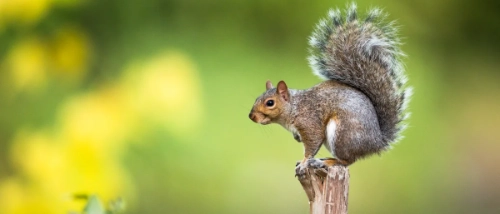
Portrait of a young grey squirrel standing on a squirrel feeder

Diet and Feeding Habits

Gray squirrels are primarily herbivores, consuming a diet rich in nuts, seeds, fruits, and fungi. Acorns are particularly important, and squirrels have evolved remarkable memory and spatial awareness that allow them to locate cached food months after burying it.

During autumn, squirrels spend much of their time collecting and storing food, a behavior known as caching. This ensures a steady supply of nourishment through the winter months, when fresh food is scarce. While they do not hibernate, squirrels may remain in their nests for several days during extreme cold, relying on stored reserves.

In urban environments, squirrels broaden their diet to include bird seed, garden vegetables, and discarded human food. This adaptability ensures their survival but also makes them frequent nuisances for homeowners.

An alert grey squirrel perching in a tree in the snow and looking up

Seasonality

Seasonal changes play a significant role in squirrel behavior. As gray squirrels' breeding season occurs in late winter and midsummer, that means activity in attics often increases during these times as mothers seek safe nesting sites. In March, juvenile squirrels from winter litters begin exploring outside the nest, so people usually notice an uptick in squirrel sightings around this time.

Autumn is another high-activity season, as squirrels intensify food caching in preparation for winter. During these months, they may be particularly aggressive about entering homes, where attics mimic the protection of tree cavities. 

Winter reduces outdoor visibility, but squirrels seek warmth and protection from the elements. They remain active indoors, where they continue to chew, nest, and forage from stored food.


Ready to Get Started

Contact us today for a free, no obligation quote!

Call Now 1-800-222-2908


Our Squirrel Control Services

JP Pest Services provides humane, effective solutions to remove squirrels and prevent their return. Our process combines detailed inspection, safe removal, and proven exclusion methods to protect your home long-term.

Our technicians use one-way excluder doors to guide squirrels safely back outdoors and seal entry points to stop re-entry. For lasting protection, we can also repair minor damage or insulation issues caused by activity.

Eastern Gray Squirrels Frequently Asked Questions

Although squirrels are fascinating creatures, many homeowners and businesses consider them pests due to their destructive potential. The common gray squirrel's adaptability explains why infestations are so common. With their ability to reproduce twice yearly, exploit natural and urban habitats, and consume various food sources, squirrels are remarkably persistent. Their behavior, while natural, makes them one of the most challenging pests to control without professional intervention.

They are highly adaptable and thrive in urban and suburban settings with abundant food and shelter. They often nest in attics and feed on bird seed.

Yes. They are known for caching nuts and seeds in the ground, which they retrieve during colder months when other food sources are scarce.

Browse Other Pests

Go

Find Your Local Branch

Go

About Us

Protecting New England since 1925 with trusted pest solutions. Join our community-focused, expert team for worry-free results.


For Service & Immediate Attention
Call 1-800-222-2908