1-800-222-2908 Call Now Book a Free Consultation

Northern Flying Squirrel

Request a Free Quote

The northern flying squirrel is one of the most fascinating small mammals in North America, particularly in New Hampshire and the northeastern United States. For homeowners, discovering flying squirrels can bring curiosity and concern. While intriguing in the wild, these small animals can create problems when they decide to use attics or wall spaces for shelter.

At JP Pest Services, our experts frequently encounter cases of flying squirrels in New England, particularly during colder months when these animals seek warmth and security inside homes and commercial buildings. Understanding their characteristics, behavior, and natural habitat is essential for appreciating their role in the ecosystem and managing potential conflicts when they move too close to people. If squirrels have entered your home, contact us for expert home pest control services, and we’ll help move the squirrels on efficiently and humanely.

Species: Glaucomys sabrinus

Season: Spring, Summer, Autumn, Winter

Size: 10" - 12"

Region: Northeastern Region of the U.S.

Unlike other squirrels, this species has developed a unique way of moving through the forest: gliding from tree to tree using a skin membrane stretched between its legs. While they are rarely seen during the day, their presence is often revealed by the sounds they make at night or the signs they leave behind.

Flying Squirrel Characteristics

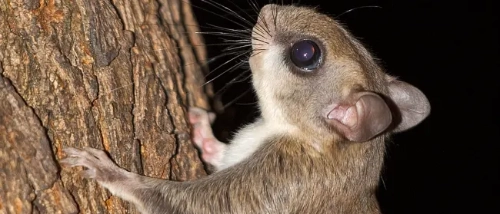
Northern Flying Squirrels are small rodents; their soft fur ranges from a grayish-brown back to a lighter cream-colored underside, allowing them to blend into the shadows of the forest canopy. Unlike other squirrels, they possess a special flap of skin, known as the patagium, which stretches between their front and back legs. This membrane acts like a parachute, enabling them to glide gracefully across distances of up to 150 feet. Observing a flying squirrel in New England’s forests at night is a rare experience, as they are secretive and most active after dusk.

The northern flying squirrel differs from its southern relative in range and size. While the southern species thrives in warmer climates, the northern flying squirrel is well adapted to colder environments and is commonly associated with dense coniferous or mixed hardwood forests. 

Flying squirrel shot at night in a boreal forest

Northern Flying Squirrel Habitat

The northern flying squirrel’s preferred habitat is mature forests with plenty of tree cavities and snags that provide nesting sites. These habitats are especially abundant in regions such as northern New England, where conifers dominate the landscape. In New Hampshire, flying squirrels are most frequently found in wooded areas with spruce, fir, and hemlock, although they will also occupy mixed forests that provide a variety of food sources.

Tree cavities created by woodpeckers or natural decay are the primary nesting locations. When cavities are unavailable, flying squirrels build leafy nests high in the trees, much like their gray and red squirrel relatives. These nests are often lined with soft materials such as moss, shredded bark, or feathers. During winter, multiple flying squirrels in NH may share a single den to conserve body heat, forming small colonies that help them survive frigid nights.

When these animals enter residential or commercial structures, they often seek attics, crawl spaces, or wall voids to substitute tree cavities. Homeowners in regions with high squirrel populations, such as New Hampshire and northern Massachusetts, may notice scratching or running sounds at night, a strong indicator that a family of flying squirrels has taken up residence indoors.

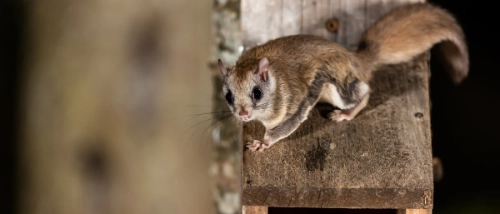
Flying squirrel shot at night in a boreal forest

Diet and Feeding Habits

The diet of the northern flying squirrel is diverse and shifts with seasonal availability. These squirrels consume nuts, seeds, fungi, lichens, berries, and occasionally bird eggs or insects. Their fondness for fungi plays an important ecological role, as they disperse spores that contribute to the health of forest ecosystems. They collect and store food in tree cavities or hidden caches in the fall, preparing for the leaner winter months.

Unlike many other common woodland animals, flying squirrels are highly active at night. They glide between trees for food, often traveling considerable distances under the cover of darkness. This nocturnal activity, combined with their quiet and elusive nature, explains why so many people are unaware of their presence even in areas with high populations.

When flying squirrels enter homes, their feeding habits can sometimes lead to chewed wires, gnawed insulation, or the accumulation of food caches in attics. While not aggressive, their activity can still create structural concerns that make professional squirrel pest services necessary.

 flying squirrel glides between the trees during

Life Cycle of the Northern Flying Squirrel

Seasonal changes and environmental conditions shape the life cycle of the northern flying squirrel. The breeding season typically begins in late winter and continues into early spring, with females producing one litter per year. The average litter size for squirrels in this species ranges from two to six young. A baby northern flying squirrel is born blind and helpless, requiring about five weeks of care before its eyes open and it begins exploring the nest.

By late summer, young flying squirrels have fully developed their patagium and are capable of gliding alongside their parents. This ability helps them escape predators and expand their range in search of food. Their lifespan varies depending on species and environmental pressures. Still, northern flying squirrels often live around three to five years in the wild, with some individuals surviving longer in protected environments.

Flying squirrel shot at night

Seasonality

Flying squirrels in New Hampshire are most noticeable in the autumn and winter months, a period sometimes referred to as the autumn squirrel surge. As temperatures drop, these animals become more likely to enter homes for warmth and secure nesting sites. They are nocturnal and remain active throughout the year, unlike hibernating species. Their activity peaks during the colder seasons, making fall and winter the most common times homeowners notice their presence.

Spring and summer bring shifts in behavior as breeding occurs and young are raised. During these months, squirrels are less likely to enter homes, as food and shelter are abundant in the forest. However, they may still take advantage of vulnerable structures, especially older homes with gaps in roofing, soffits, or siding.


Ready to Get Started

Contact us today for a free, no obligation quote!

Call Now 1-800-222-2908


Our Squirrel Control Services

JP Pest Services provides humane, effective solutions to remove squirrels and prevent their return. Our process combines detailed inspection, safe removal, and proven exclusion methods to protect your home long-term.

Our technicians use one-way excluder doors to guide squirrels safely back outdoors and seal entry points to stop re-entry. For lasting protection, we can also repair minor damage or insulation issues caused by activity.

Frequently Asked Questions

Unlike gray or red squirrels, Northern Flying Squirrels (Glaucomys sabrinus) are strictly nocturnal. They emerge from their nests about an hour after sunset and stay active until dawn. If you hear heavy "thumping" or "scurrying" in your attic around 2am, it’s almost certainly a flying squirrel and not a common gray squirrel.

They usually produce one litter per year, with 2 to 4 young born in late winter or early spring (March to May). In Maine and New Hampshire, we find that "nursery colonies" of multiple females often cluster in the same attic space, creating significant noise and waste accumulation during the spring rearing season.

They prefer mature coniferous and mixed-wood forests across Northern North America. As they are "cavity nesters," they’re highly attracted to structural voids and soffits of homes in wooded New England subdivisions. Squirrels can squeeze through holes as small as a quarter, often near the roofline.

Their diet is unique among squirrels: they eat lichens and fungi (truffles), plus nuts and seeds. Unlike other rodents, they store fungi inside attics. Flying squirrel infestations often cause mold or odor problems within insulation.

They don’t actually fly. They glide using a "patagium"a furry, parachute-like membrane that extends from their wrists to their ankles. A Northern Flying Squirrel can glide over 150 feet from a high tree branch directly onto your roof, allowing them to bypass traditional ground-level pest barriers like fences or foundation sprays.

Hearing Noises at Night?

If the scratching in your ceiling starts after 9:00 PM, you likely have a Flying Squirrel colony. As they are social nesters, "one squirrel" usually means ten or more. Request a Night-Vision Attic Inspection.

Browse Other Pests

Go

Find Your Local Branch

Go

About Us

Protecting New England since 1925 with trusted pest solutions. Join our community-focused, expert team for worry-free results.


For Service & Immediate Attention
Call 1-800-222-2908