© 2026 Rentokil Initial plc © JP Pest Services. All Rights Reserved.
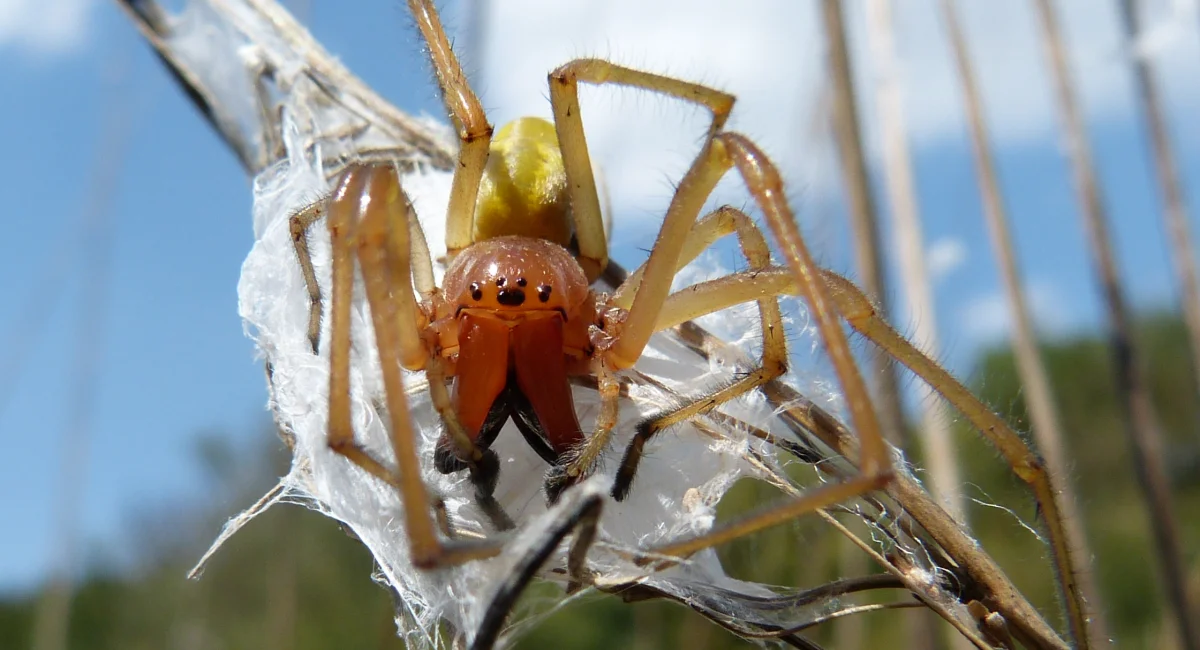
The yellow sac spider (Cheiracanthium spp.) is a small, pale, and fast-moving nocturnal hunter, and a common venomous spider in New England. This is the species most frequently responsible for indoor spider bites. Found throughout Maine, Massachusetts, New Hampshire, Rhode Island, and Vermont, they are a year-round presence in homes and businesses across the region.
Yellow sac spiders are drawn to sources of prey and seek out warmth, particularly in the colder months. They’re quick and nimble, and will find a way in through any cracks or crevices.
Species: Cheiracanthium inclusum / Cheiracanthium mildei
Season: Year-round; most active spring through fall
Size: Up to 0.4 inches (10mm) body length
Region: Throughout New England and the USA
Concern: Venomous; capable of a painful bite that may cause localized swelling and irritation
Are Yellow Sac Spiders Dangerous?
Yellow sac spiders are mildly venomous, and its bite is considered the most common spider bite reported in the United States. They don’t present a real health risk, but their bites are notably painful relative to their small size. Symptoms typically include immediate sharp pain, redness, and swelling at the bite site, occasionally accompanied by mild itching or a slow-healing lesion in sensitive individuals.
The question of whether yellow sac spiders are poisonous is a common one. Like all venomous spiders, they inject venom rather than being harmful to touch. Most bites heal on their own with basic care, but if swelling worsens or the bite site shows signs of infection, you should seek medical advice.
Struggling with Spiders?
Call now to book your free inspection.
Appearance
The yellow sac spider is a small, slender spider with a subtle but distinctive appearance:
- Color: Pale yellow, cream, or light green body, sometimes with a faint darker stripe running along the abdomen, making them easy to miss against light-coloured walls and ceilings
- Legs: Eight long, slender legs with darker tips, giving them a delicate appearance, but don't let their size fool you, they're deceptively fast and agile.
- Eyes: Eight small eyes arranged in two horizontal rows, typical of sac spiders; not as prominent as the large forward-facing eyes of wolf spiders.
Behavior
Yellow sac spiders are active, nocturnal hunters that roam freely across walls, ceilings, and floors after dark in search of prey. Rather than spinning a web to trap insects, they hunt on the move. They’re faster, and travel further in search of prey than many other common household spiders. During the day, they retreat into their characteristic silken sac, a small, flattened tube of silk typically found where walls meet ceilings, behind picture frames, or tucked into folded fabrics and clothing.
Biting is more common with yellow sac spiders than with many other species, largely because of their habit of hiding in clothing, bedding, and shoes. When accidentally pressed against skin, they will bite defensively. Female yellow sac spiders are also protective of their egg sacs, which are deposited inside the silken nest and guarded until the spiderlings hatch. A single female can produce multiple egg sacs over her lifespan, contributing to a growing indoor population if left unchecked.
Habitat
Yellow sac spiders are highly adaptable and thrive in both indoor and outdoor environments. Key habitat preferences include:
- Outdoors: Garden vegetation, leaf litter, under bark, and along the exterior walls of buildings–particularly in areas with dense plant growth close to the foundation
- Indoors: Upper wall and ceiling junctions, behind wall hangings and picture frames, inside folded fabrics, clothing, and bedding, and in cluttered storage areas
These predatory spiders are a year-round presence in New England homes, though they become more active indoors during the cooler months as outdoor temperatures drop. Their small size and pale coloring make them easy to miss, and their silken sac nests are often the first sign homeowners notice. If you are finding small, papery silk pouches near your ceiling or in corners, yellow sac spider activity is a likely cause.
Professional Removal & Prevention
At JP Pest Services, we take a targeted approach to yellow sac spider control. We combine specialist treatments with practical prevention measures to keep your property protected.

Specialized Perimeter Barriers
One of the most effective ways to prevent yellow sac spiders from entering your home is to apply specialized perimeter barriers. Our technicians treat the exterior of your property, targeting foundation edges, entry points, and areas of dense vegetation close to the building where yellow sac spiders are most likely to establish themselves. This creates a protective boundary that deters spiders from moving indoors, particularly during the fall when spider activity increases across New England and Massachusetts.

Egg Sac Removal
Locating and removing yellow sac spider egg sacs is a critical part of any effective treatment. A single female yellow sac spider can produce multiple egg sacs over her lifespan, each containing dozens of eggs. Leaving them in place allows the population to grow rapidly and undetected. Our technicians carefully inspect ceiling junctions, wall voids, and sheltered areas throughout your property, removing both active nests and egg sacs to reduce the existing population and prevent the next generation from establishing indoors.
Book a free inspectionFrequently Asked Questions About Yellow Sac Spiders
Yellow sac spiders prefer to build their silken retreat sacs at the junction where walls meet ceilings, in sheltered, undisturbed spots that offer protection during the day. From there, they descend at night to hunt across walls and floors before returning to their sac before dawn. If you're regularly noticing small, pale spiders near your ceiling or finding papery silk pouches in the upper corners of rooms, yellow sac spider activity is the most likely explanation.
It is possible, though not common. Yellow sac spiders are nocturnal hunters and are most active at night, which brings them into the same space as sleeping humans. Bites most often occur when a spider becomes trapped against the skin, in bedding, clothing left on the floor, or folded fabrics. Keeping bedding off the floor and shaking out clothing before wearing are effective precautions.
Yes – yellow sac spiders are small enough to enter through vents, gaps around utility penetrations, and other small openings in the building envelope. They are also commonly introduced indoors on plants, boxes, and items brought in from outside. Ensuring vents are fitted with fine mesh covers and sealing gaps around windows, doors, and utility lines can help reduce entry points. A professional inspection can identify the most likely routes being used on your specific property.
The small, papery silk pouches you may find on your ceilings are the retreat sacs of yellow sac spiders, not traditional webs. Once a sac has been abandoned, it can remain in place and collect dust, making it look like an old, empty web. Finding multiple empty sacs is a sign that yellow sac spiders have been active in your home, potentially for some time. If you're seeing them regularly, it's worth having a professional inspection to assess the extent of the activity and identify any active nests.