© 2026 Rentokil Initial plc © JP Pest Services. All Rights Reserved.
Odorous House ants are common in households and businesses, and are best known for the strong, unpleasant smell they release when crushed. They often travel in long trails and nest in hidden locations, which allows colonies to spread unnoticed inside walls and other protected areas.
Correct identification matters. Odorous house ants behave differently from pavement ants and little black ants, and respond poorly to many do-it-yourself treatments. Knowing whether the ants in your kitchen, bathroom, breakroom, or canteen are odorous house ants helps determine why they keep returning and what type of control is most effective.
Species: Tapinoma sessile (Say)
Season: Spring, Summer, Autumn
Size: 1/8” or less
Region: Throughout the U.S.
About Odorous House Ants
Odorous house ants are found throughout the United States and are especially common in residential areas. However, they flourish in any environment with plenty of food, moisture, and shelter, which makes homes, shared kitchenettes, and restaurants the perfect base for them. Accurate identification is important as they form large, interconnected colonies that are hard to eliminate with store-bought products alone.
These ants get their name from the strong odor they emit when crushed, often described as resembling rotten coconut or blue cheese. Odorous house ants can live both outside and inside, so infestations can last all year, especially in moisture-prone areas.
A single colony can have thousands of worker ants and multiple queens, allowing populations to grow quickly. When disturbed, colonies can split into smaller groups, a process called budding, which often causes infestations to spread rather than move away. For this reason, professional identification and treatment are often necessary to fully eliminate them.
If you are experiencing a problem with Odorous house ants in your home, find out more about our ant control process.
Seeing Ants?
Call now to book your free inspection.
How to Spot Odorous House Ant Infestations
Don't dismiss a few ants as a coincidence. These initial sightings are often the first sign of a larger, hidden odorous house ant colony. If you notice any of the following warning signs, it's time to seek professional help:
- Increasing indoor trails: A few ants near counters, sinks, or along baseboards can quickly turn into long, visible trails as the infestation grows.
- Ants emerging from wall voids: Odorous house ants frequently nest inside wall voids near kitchens, bathrooms, and laundry rooms, entering through small cracks, outlets, and plumbing gaps.
- Recurring activity despite treatment: Ants that return after cleaning or spraying often signal a large odorous house ant infestation spread throughout hidden nesting areas.
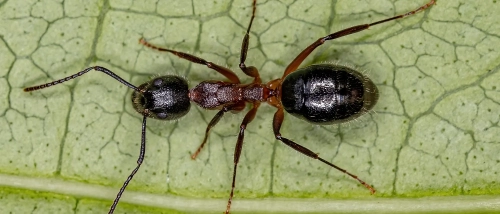
Odorous Ant Habitat
Knowing where odorous house ants prefer to nest is important for identification. Outside, they usually live in soil, mulch, leaf litters, under stones, and near foundations or downspouts where moisture collects.
Inside, they commonly nest in wall spaces, beneath floors, near water heaters, and around plumbing lines, often close to kitchens and pantries where food is readily available. Even small spills, crumbs, or pet food can support a colony.
These ants can easily move their nests, so changes in weather or inadequate do-it-yourself treatments can push them deeper into structures. Professional pest control that treats indoor and outdoor nests offers better results, particularly when basic household pest prevention has failed.
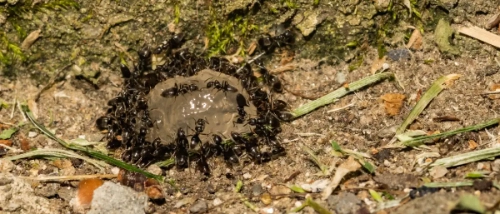
Odorous Ant Behavior
Odorous house ants are highly social and rely on scent (pheromone) trails to guide workers to food. This is why you often see long, organized lines of ants moving along walls and counters.
They primarily eat sweet foods but will also feed on proteins and greasy residues, allowing them to exploit many household food sources. Odorous house ants don’t usually bite when threatened, but they are a major nuisance in large numbers. If you disturb their colony, it can split into multiple groups, so using the wrong treatment can exacerbate the problem.
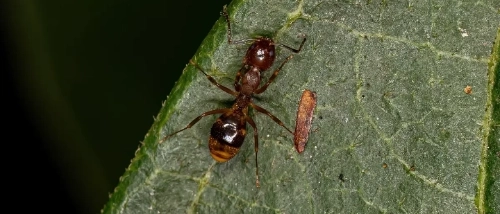
Odorous House Ant Size
Odorous House Ants are small, usually about one-eighth of an inch long. Most workers are uniform in size, unlike other ant species, where they can vary in size.
Even though they are small, you can’t miss them when they’re on the hunt for food, as the scent trail attracts a growing ‘parade’, or army, of worker ants, sometimes in their thousands.
Even so, size alone is not enough for identification, as most ants look similar. Professionals examine odor, nesting locations, and behavior patterns to confirm the species or order to develop a customized treatment plan.
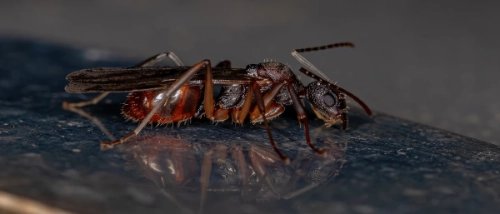
Odorous House Ant Life Cycle
The life cycle of odorous house ants helps explain how infestations grow. It starts with one or more queens laying eggs that develop into larvae, pupae, and finally emerge as adult workers or reproductive ants.
Having more than one queen means the colony continually produces eggs, allowing the population to grow rapidly. This is why infestations persist if treatments fail to eliminate all the ants.
At some point, reproductive ants leave the colony to establish new nests, often nearby. This is one of the main reasons why infestations can spread throughout a home and surrounding areas.
Seasonality
Odorous house ants are a year-round problem. However, they are more active in warmer months and may come inside seeking food if the weather is too dry or wet. You’re most likely to spot them in spring and summer when they search for food.
When it’s cold outside, warm homes and heated commercial buildings allow odorous house ants to remain active. They’ll establish nests deep inside structural voids and hidden spaces both for protection and to avoid detection. An awareness of seasonal activity is key to proper identification and effective ant control.
Contact JP Pest Services for Odorous House Ant Control
Professional pest control is the fastest way to manage an odorous house ant infestation. JP Pest Services specializes in finding and controlling ant populations using science-based methods tailored to your property. Our technicians are experts in ant behavior, habits, and their life cycle.
We can locate nests, identify attractants, and apply targeted treatments to eliminate entire colonies. Our team also offers advice on cleaning and prevention to discourage future colonies. By correctly identifying odorous house ants, we can create a plan that yields long-lasting results.
Browse Other Pests
Frequently Asked Questions About Odorous House Ants
An odorous house ant is small, usually about one-eighth of an inch long. Their tiny size makes them easy to miss until you see a steady trail indoors.
When crushed, they release a defensive alarm pheromone, which sends a distress signal to the colony. The smell is usually described as reminiscent of blue cheese, because both contain a chemical compound called Methyl Ketones.
Odorous house ants are not dangerous to people or pets, but they can contaminate food and become a nuisance indoors. They do not sting and rarely bite, but infestations can be persistent without professional help.