© 2026 Rentokil Initial plc © JP Pest Services. All Rights Reserved.
Species: Myotis lucifugus
Season: Spring, Summer, Autumn
Size: 3 - 4 inches
Region: Throughout the U.S.
Threats: Rabies risk, guano damage, odors
The little brown bat (Myotis lucifugus) is one of the smallest bat species in New England. While only a few inches long, they play a significant role in local ecosystems by controlling insect populations and maintaining a healthy environmental balance. They are highly social and curious, and a key insect predator. However, habitat loss is forcing them into man-made structures to hibernate and reproduce, risking the spread of disease and property damage.
This little brown bat identification guide explores how to recognize the species, its habits, and why it’s so often found in close contact with people.
Little Brown Bat Characteristics
The little brown bat is a small, insect-eating species that averages about four inches in length, with a wingspan of between eight and nine inches. It has medium to dark brown, glossy fur and a pale belly. Its face, ears, and wings are dark and leathery, contrasting with the darker fur.
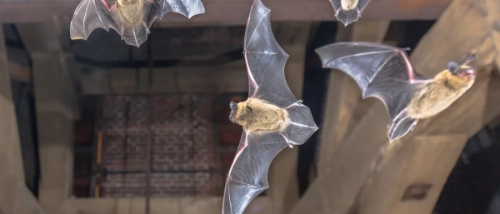
These bats have short, rounded ears and a blunt muzzle. They are agile, fast fliers, capable of sharp turns and quick dives as they forage for insects near water, fields, and forest edges. Their echolocation calls are high-pitched and fast, enabling them to navigate tight spaces with accuracy, which is an advantage when hunting over rivers, ponds, or near streetlights where insects congregate.
Because they’re so small and quiet during the day, little brown bat often go unnoticed until droppings (guano) or faint scratching noises reveal their presence.
Struggling with Bats?
Call now to book your free inspection.
Little Brown Bat Life Cycle
The life of a little brown bat follows a seasonal rhythm. Females emerge from hibernation sites in early spring and form maternity colonies to give birth. Each female typically has one pup per year, between May and June.
Pups grow quickly, nourished by their mother’s milk, and begin to fly after about three weeks. By midsummer, juveniles start feeding on their own, often flying around attics or barns as they learn to hunt. This noisy period can be irritating for property owners, but it’s short-lived; by late summer, most young bats are strong enough to forage independently.
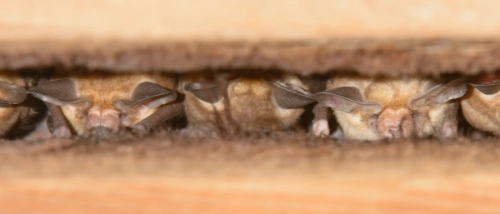
In autumn, they build fat reserves in preparation for winter. Mating occurs before hibernation, but fertilization doesn’t take place until the bats emerge in spring. During hibernation, they cluster tightly together to maintain body heat, reducing activity and slowing their metabolism to survive without food.
Little Brown Bat Habitat
Their habitat extends across much of North America, but New England provides particularly suitable conditions. They thrive near rivers, lakes, and wetlands where insects are plentiful, as well as in wooded and suburban areas that offer both feeding and roosting options.
Habitat loss and environmental change have forced many colonies to adapt to human-made structures. This change is partly due to the loss of natural roosting sites, such as old trees and undisturbed caves.
Across New England’s older homes, little brown bat squeeze through gaps around gable vents, chimneys, and soffits to roost inside attics or behind siding. In farmhouses, barns, and lakefront cottages, they take advantage of warm, enclosed spaces that replicate the conditions of natural tree cavities. Roof peaks and upper walls, where heat gathers during the day, are especially attractive for maternity colonies.
Larger buildings are also at risk. Older brick mills and manufacturing sites across Massachusetts and New Hampshire are typical hotspots, offering the deep cracks and sheltered rafters bats seek out for protection. Business pest solutions that include regular inspection and humane management are vital to prevent bats from roosting indoors. For property owners, timely professional exclusion can protect both your structure and the bats themselves.
Common Roosting Areas
Little brown bats are experts at locating warm, secluded spaces where they can rest during the day and nurse their young through summer. Although their natural roosts once included tree hollows and loose bark, today’s colonies often turn to buildings that offer similar protection from weather and predators.
Small bats will slip into the uppermost parts of homes, settling behind roof beams, within attic insulation, or under roofing tiles near heat vents and chimneys. They’re also known to squeeze into narrow gaps behind siding, shutters, or fascia boards, taking advantage of small cracks that go unnoticed until a colony becomes established.
Larger structures such as barns, warehouses, and food-storage facilities provide equally inviting spaces that offer similar security to caves. Meanwhile, outdoor signs, ductwork, and recessed lighting fixtures can attract bats looking for both shelter and easy access to flying insects. Older buildings, with deep mortar joints and hidden roof voids, are also popular spots for roosting.
Whether inside a farmhouse or a factory, these bats are drawn to stable temperatures and quiet areas free from disruption. However, the potential for contamination and disease transmission through accumulations of guano, as well as the associated odors, staining, and respiratory hazards, makes professional inspection, cleanup, and exclusion essential for long-term protection.
Where They Are Found in Homes
When little brown bats find their way indoors, they often gather in large numbers and gravitate toward the warmest areas of a building. Rather than spreading out like larger bat species, they cluster tightly together, clinging to rafters, insulation, or support beams in the uppermost parts of the house. Heat rising through the roofline helps them maintain body temperature, especially during maternity season when females raise pups.
Because of their size, little browns can enter through gaps as narrow as half an inch, around roof joints, vent screens, or chimney flashing. Once inside, colonies may shift deeper into wall voids or ceiling cavities during the day to stay undisturbed. Homeowners sometimes first notice faint scratching sounds at dusk or early morning, when the bats are leaving or returning from feeding.
Their presence is often revealed not by sight, but by signs such as fine, pellet-like droppings (guano) near attic entry points or dark rub marks from body oils along siding or beams. These indicators suggest active movement and nesting within the structure. Home pest solutions for early detection and humane removal are key to preventing odor, damage, or contamination in insulation and stored belongings.
Little Brown Bat Diet
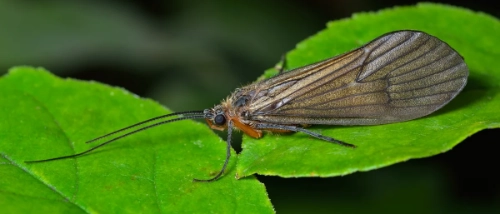
The little brown bat diet primarily consists of insects. These bats are opportunistic feeders that forage near water, over open fields, and along forest trails. They eat aquatic insects such as mayflies, caddisflies, and midges, along with mosquitoes, beetles, and moths.
Each night, a single bat can catch over 1,000 insects in an hour using rapid, precise echolocation. Their feeding helps reduce mosquito populations and limits agricultural pests, providing a valuable natural pest control service.
In New England’s towns and cities, they often hunt around streetlights, parks, and ponds, anywhere insects gather after dusk. In agricultural or business settings, bats feed around warehouse lights or near retention ponds, thereby reducing the number of flying insects in workspaces.
Seasonality
Peak activity for little brown bats occurs from late May through early October. During summer, maternity colonies form in attics, barns, and outbuildings. By July and August, young bats begin flying, sometimes causing noise inside attics as they practice navigating.
When cold weather arrives, little brown bats migrate to hibernation sites, traditionally caves and mines, where they cluster in large groups to survive winter. Their hibernation behavior makes them vulnerable to White-nose Syndrome, a fungal disease that disrupts sleep cycles and can be fatal, resulting in declining numbers. Learn more about the impact of this illness in our article: How Bad is White Nose Syndrome?
Little Brown Bat Predators
Although bats have few natural predators due to their nocturnal habits, the little brown bat faces several threats in the wild. Owls, hawks, and snakes are their main predators, often striking when bats emerge at dusk. On the ground, raccoons and domestic cats may prey on injured or grounded bats.
Beyond predation, human-related factors pose greater risks. Habitat destruction, pesticide use that reduces insect populations, and the spread of fungal disease have all contributed to population declines. White-nose Syndrome, in particular, has had a devastating impact on hibernation sites across New England. Despite these challenges, conservation efforts continue to protect roosting habitats and promote healthy ecosystems that support both bats and people.
Browse Other Pests
With New England’s mix of forests, older buildings, and shifting seasons, species like carpenter, pavement, and odorous ants find plenty of opportunities to forage and establish colonies in convenient buildings.
These hardy pests hide in tight cracks near sleeping areas and move easily between rooms and apartments. Their ability to survive for long periods without feeding and knack for staying out of sight make them hard to track and eliminate.
German and American cockroaches are common in New England, settling in humid basements or along pipe chases. Their robust and versatile nature enables them to withstand seasonal temperature shifts.
Frequently Asked Questions
Little brown bats live throughout North America but are especially common in New England. They prefer habitats near water and wooded areas but frequently roost in attics, barns, and warehouses when natural roosts are scarce. Their adaptability makes them one of the most likely bat species to encounter in homes or businesses.
Yes. Little brown bats hibernate from late fall through early spring in caves, mines, and similar hibernation sites that remain cool and humid. During this period, their metabolism slows, allowing them to survive without food. Disturbing hibernating bats can be fatal, so winter exclusion should always be handled by professionals familiar with wildlife laws.
The little brown bat is not yet listed as federally endangered but is considered a species of concern in many U.S. states, including those in New England. Populations have declined sharply due to White-nose Syndrome, the fungal disease that affects bats during hibernation. Conservation programs aim to restore populations through habitat protection and public education on humane bat management.