© 2026 Rentokil Initial plc © JP Pest Services. All Rights Reserved.
In New England, the American Dog Tick is one you are most likely to come across. Known scientifically as Dermacentor variabilis, this tick prefers large hosts, including humans and other mammals. Although it is not a carrier of Lyme disease, it can carry other serious illnesses such as Rocky Mountain spotted fever and tularemia.
Because the American Dog Tick is active during the warmer months and prefers open, grassy areas where people and pets spend time, encounters are more common from spring through to early fall. Understanding how to identify, prevent, and manage this species can help protect your family and animals from potential bites and the associated health risks.
JP Pest Services has been offering tick control, and prevention strategies throughout New Hampshire, Maine, and Massachusetts since 1925. Our team understands the habitats, behavior, and life cycles of ticks, helping homeowners and businesses reduce the risk of exposure.
Species: Dermacentor variabilis (Say)
Season: Summer
Size: 1/16″ – 1/4″ long (before feeding)
Region: Northeastern U.S.
About American Dog Ticks
The American Dog Tick is larger than many other common tick species. Adult females measure approximately five millimeters in length when unfed but can grow several times larger once filled with blood. Males are smaller, reaching approximately four millimeters in length, and can be recognized by their ornate, silver-gray patterns that cover most of their backs. Female American Dog Ticks display a distinctive silver-colored shield, known as a scutum, just behind the head, while the remainder of the body is reddish brown.
This species belongs to a group known as "hard ticks," which have a tough outer shell that protects them as they move through vegetation in search of a host. The tick feeds on different hosts throughout its life, starting with small rodents as larvae and nymphs, and eventually moving to larger mammals, including dogs and humans, as adults.
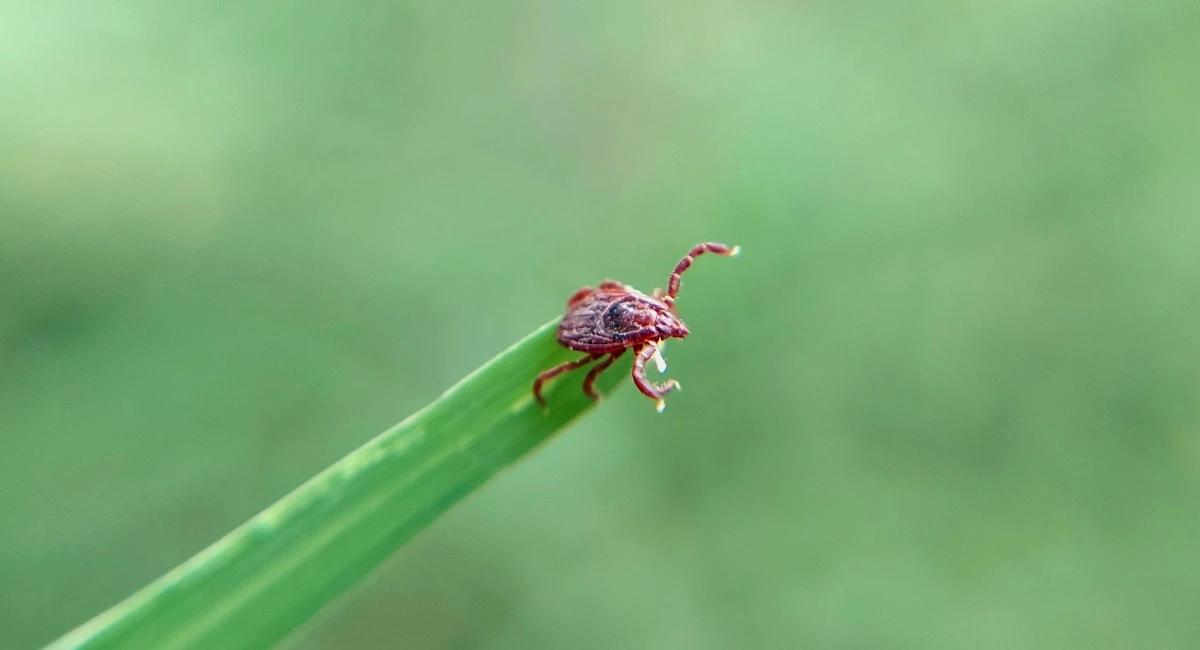
American Dog Tick Behavior
American Dog Ticks are most active in warm weather and during daylight hours. American Dog Ticks prefer open fields, meadows, and grassy paths, unlike other ticks that like shaded wooded environments.
Due to their attraction to movement and body heat, they tend to attach easily to people or pets passing through these areas.
Adult American Dog Ticks rely on a behavior known as questing, in which they climb to the tips of grass blades or low vegetation and extend their front legs outward to latch onto a passing host. Their flattened bodies and strong claws enable them to cling securely to fur, hair, or clothing once they are attached.
Once an American Dog Tick attaches to a host, it can remain in place for several days while feeding. The female tick will swell with blood, detaching only after it has become full and is ready to lay eggs. Males feed less frequently and for shorter periods but remain active in the same environments. After feeding, females typically move to sheltered areas with high humidity to deposit their eggs.
American Dog Tick Habitat
American Dog Ticks prefer grassy fields, overgrown lawns that border wooded areas, and transitional areas between forests and open land. Commonly found along roadsides, hiking trails, and field edges, they can easily encounter passing animals. Unlike the Blacklegged Tick, which thrives in moist, shaded environments, the American Dog Tick tolerates drier and sunnier conditions.
Around homes, American Dog Ticks may appear in tall grass, along fence lines, or near areas where pets and wildlife frequently roam. Because they depend on host animals for food, properties that attract deer, raccoons, or small mammals are more likely to experience tick activity. Although ticks cannot survive long indoors, they can be carried inside on pets or clothing, where they may remain for a short time before dying due to lack of moisture.
Keeping lawns trimmed, reducing leaf litter, and discouraging wildlife from frequenting your yard are necessary preventive steps for limiting suitable tick habitats.
American Dog Tick Life Cycle
The life cycle of the American Dog Tick includes four stages: egg, larva, nymph, and adult. The entire process can take from several months to two years, depending on environmental conditions and host availability.
- The female tick begins the cycle by laying thousands of eggs in a protected location, such as under leaves, grass, or other ground cover.
- These eggs hatch into larvae, also known as seed ticks, which are very small and have six legs. Larvae typically feed on small mammals such as mice or voles before dropping to the ground to molt into nymphs.
- Nymphs, now with eight legs, seek a new host, often another small animal, and feed again to continue development. After another molting phase, they become adults.
- Adult ticks then seek larger hosts, such as dogs, raccoons, or humans.
Each stage of the American Dog Tick's life depends on the successful location of a host. However, because they can survive for months without feeding, these ticks are highly resilient and can endure long periods when hosts are scarce.
Seasonality
Ticks thrive best from April to September, with peak activity occurring in the warmer months, such as May and June. During these months, warm temperatures and high humidity create ideal conditions for tick movement and host-seeking behavior. Adult ticks can occasionally be found earlier or later in the season if the weather remains mild.
Although tick activity slows during colder months, unfed adults can survive through winter in protected outdoor areas. Eggs laid in late summer or fall may hatch the following spring, restarting the cycle. Due to their adaptability and persistence, ongoing prevention and professional control are crucial throughout the year.

Risks to Humans and Pets
The American Dog Tick is known to spread two main diseases: Rocky Mountain spotted fever and tularemia. Both illnesses are bacterial infections transmitted through the tick's bite and can cause significant health complications if left untreated.
In humans, symptoms may include:
-
Fever, headache, and muscle pain
-
Rash (common with Rocky Mountain spotted fever)
-
Swollen lymph nodes and fatigue (common with tularemia)
-
Signs of a tick bite: redness or a small bump at the bite site, itching, pain, or irritation
If symptoms appear days after a bite, seek medical care promptly. Both illnesses require medical diagnosis and antibiotic treatment.
In pets, especially dogs, American Dog Ticks can cause irritation, blood loss, or infection. Protect pets with regular tick checks, grooming, and vet-approved preventatives.
Tick removal: Use fine-tipped tweezers to grasp the tick as close to the skin as possible and pull it upward slowly. Clean the area with soap and water. Avoid crushing the tick, using petroleum jelly, or applying heat.
For medical concerns related to a tick bite, contact a healthcare provider or a veterinarian.

Contact JP Pest Services for Tick Control & Protection
At JP pest, we provide comprehensive treatments and prevention plans to keep your family, homes, and business safe from ticks.
We are committed to protecting both residential and commercial properties throughout New Hampshire, Maine, and Massachusetts.
If you discover ticks on your property, don’t delay in seeking professional support. Contact JP Pest Services today for reliable, long-term protection and peace of mind.
Contact us