© 2026 Rentokil Initial plc © JP Pest Services. All Rights Reserved.
The Blacklegged Tick, also known as the Deer Tick, is one of the most significant tick species in New England because of its role in transmitting Lyme disease and other serious illnesses. Scientifically known as Ixodes scapularis, this small, dark-bodied tick is responsible for the majority of tick-borne infections in humans and pets throughout the region. Its ability to thrive in wooded areas and adapt to changing seasons has made it a persistent concern for homeowners, outdoor enthusiasts, and public health officials alike.
Understanding how to identify Deer Ticks, where they live, and how they behave is the first step toward effective prevention. With professional support, it is possible to reduce tick exposure and lower the risk of Lyme disease transmission in both residential and commercial settings.
Species: Ixodes scapularis
Season: Spring, Summer, Autumn
Size: 2.7 mm
Region: Eastern portion of U.S.
About Blacklegged (Deer) Ticks
The Blacklegged Tick is smaller than the more familiar American Dog Tick, but poses a much greater threat. Adult females are reddish brown with a dark brown or black dorsal shield located just behind the head, while adult males are uniformly dark and smaller in size. When unfed, adults measure about one-eighth of an inch in length but can swell several times larger after feeding. Nymphs are tiny, often no bigger than a poppy seed, which makes them difficult to detect on skin or fur.
This species earns its name from its dark-colored legs, which contrast with its lighter body. Both adult and immature ticks feed on blood at various life stages, relying on host animals such as deer, rodents, birds, and humans.
Deer Ticks are distributed widely throughout the eastern and upper midwestern United States, and their populations have expanded significantly across New England in recent decades. The increase in white-tailed deer and mild winter temperatures has helped sustain their presence, making year-round awareness and prevention increasingly important.
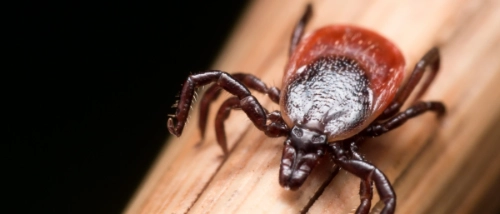
Blacklegged Tick Behavior
The behavior of the Blacklegged Tick sets it apart from other species. It is a patient parasite that uses a strategy known as questing to locate hosts. Rather than actively seeking out animals, the tick climbs onto low vegetation and waits with its front legs extended until a potential host brushes past. Sensitive to changes in body heat and carbon dioxide, it can quickly attach and begin feeding once contact is made.
Once attached, the feeding process can last for several days. The tick inserts its mouthparts into the skin and secretes a cement-like substance to hold itself in place while drawing blood. During this feeding period, pathogens such as the bacteria that cause Lyme disease may pass from the tick to its host.
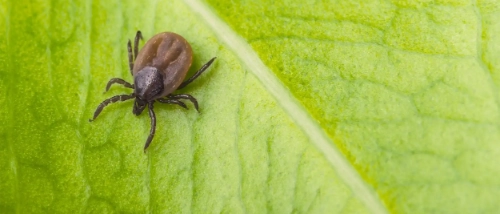
Blacklegged Tick Habitat
Deer Ticks prefer habitats that provide high humidity, dense vegetation, and access to wildlife hosts. They thrive in wooded areas, brushy edges, and overgrown landscapes where leaf litter collects and retains moisture. In New England, they are most commonly found in forested regions, along hiking trails, and in backyards that border wooded land.
Around homes, Blacklegged ticks often live where lawns meet wooded areas, especially in shaded spots with tall grass or shrubs.. They also hide in garden beds, beneath groundcover plants, or along stone walls where deer and rodents pass. Since they need moisture to survive, they don’t stay in dry, sunny, or open spaces for long.
Homeowners can reduce tick habitats by keeping lawns trimmed, removing leaf litter, and creating clear borders between wooded and landscaped areas. These preventive steps lower humidity at ground level, making the environment less suitable for ticks. However, professional pest management is often necessary to achieve meaningful population control, particularly in properties surrounded by natural tick habitats.
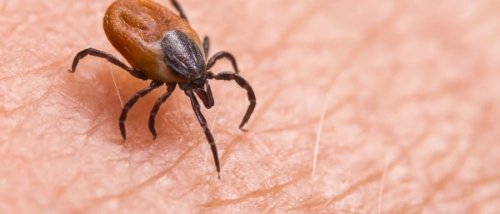
Blacklegged Tick Life Cycle
The Blacklegged Tick (Ixodes scapularis) progresses through four stages: egg, larva, nymph, and adult. The full life cycle can take up to two years, depending on environmental factors such as temperature, humidity, and host availability.
1. Egg Stage
Female ticks lay up to 3,000 eggs in moist, shaded areas such as leaf litter or tall grass. The eggs hatch into larvae within several weeks when conditions are warm and humid.
2. Larva Stage
Six-legged larvae feed on small animals like mice or birds during late summer. After feeding, they drop to the ground and molt into eight-legged nymphs.
3. Nymph Stage
Nymphs are about the size of a poppy seed and often feed on humans, pets, and wildlife. Because they are small and go unnoticed, they are responsible for most Lyme disease transmissions.
4. Adult Stage
Adult ticks feed on larger hosts such as deer, dogs, and humans during the cooler months. After mating and feeding, females lay eggs and die, continuing the cycle.
Understanding each life stage helps identify when and where to apply treatments to reduce tick populations and prevent the transmission of diseases.
Seasonality
Deer Tick activity varies by season, but these pests are present year-round in New England. Nymphs are most active from late spring through midsummer, coinciding with the time of year when people and pets spend more time outdoors. Adult ticks are most active in the fall but can remain active throughout mild winter days if temperatures rise above freezing.
Eggs are typically laid in late spring or early summer, with larvae emerging later in the season to begin feeding. Because the life cycle spans two years, all stages can overlap depending on weather conditions. This continuous activity means that vigilance is necessary even outside the typical warm-weather months.
Begin tick prevention early in the season and maintain professional treatments through fall to ensure consistent protection against Deer Tick exposure. Regular inspections and habitat management during cooler months help limit populations before the next active cycle begins.

Risks to Humans and Pets
Blacklegged Ticks are among the most medically significant parasites in the United States due to the diseases they carry. They are the primary vectors of Lyme disease, anaplasmosis, babesiosis, and Powassan virus, all of which can cause severe symptoms in humans and animals. The bacteria responsible for Lyme disease, Borrelia burgdorferi, are transmitted through the bite of infected ticks. The longer a tick remains attached, the higher the likelihood of transmission.
In humans, Lyme disease and other tick-borne illnesses may present with:
-
Early symptoms: fatigue, headache, muscle aches, and fever
-
Typical rash: red, expanding rash that may resemble a bull’s-eye pattern
-
If untreated, infection can spread to the joints, heart, and nervous system, leading to chronic complications.
-
Other tick-borne illnesses often cause similar early symptoms, making professional medical evaluation essential after any tick bite.
Pets, especially dogs, are also vulnerable to tick-borne diseases. Infected animals may exhibit symptoms such as fever, lameness, lethargy, and loss of appetite. Regular tick prevention treatments prescribed by veterinarians, combined with frequent grooming and inspection after outdoor activity, are the best ways to protect pets.
Although Blacklegged Ticks can bite at any stage, nymphs and adult females spread most diseases. Nymphs are so small that bites go unnoticed, making prevention such as using repellent, wearing long clothing, and checking for ticks essential.
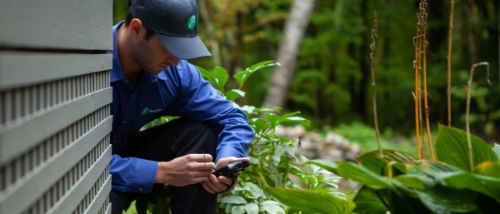
Contact JP Pest Services for Tick Control & Protection
At JP Pest, we advise that good property maintenance is a thorough way to keep ticks away, but also a helping hand from a professional, trusted pest control company. We provide comprehensive treatments and prevention plans to keep your family, homes, and business safe from these tiny pests.
Since 1925, JP Pest Services has been committed to protecting both residential and commercial properties throughout New Hampshire, Maine, and Massachusetts. Whether you are dealing with American Dog Ticks, Blacklegged ticks, or other biting pests, our licensed professionals safeguard your family, pets, and outdoor spaces.
If you find ticks, don't wait to get professional help. Contact our team at JP today.
Contact usFrequently Asked Questions About Blacklegged (Deer) Ticks
Blacklegged Ticks prefer shaded, humid environments such as wooded areas and leaf litter, unlike species that thrive in open, sunny spaces. They are most active in cooler seasons and can remain active throughout mild winters, increasing the chance of year-round exposure.
Deer Ticks are among the most dangerous tick species in New England because they transmit several serious diseases, including Lyme disease. Their bites can infect both humans and pets, leading to long-term health problems if untreated.
Deer Ticks can spread Lyme disease, anaplasmosis, babesiosis, and Powassan virus to humans and animals. These illnesses can cause fever, fatigue, muscle pain, and in severe cases, neurological or cardiac complications.