© 2026 Rentokil Initial plc © JP Pest Services. All Rights Reserved.
When late summer transitions into early fall, homes and businesses across Massachusetts, New Hampshire, Vermont, and Maine face the annual threat of boxelder bug invasions. With the onset of cooler temperatures and the abundance of boxelder and maple trees, these New England states become prime targets for pests seeking warmth and shelter.
An infestation, or congregation, can be a massive inconvenience for homeowners. For property managers, manufacturing facilities, food and beverage processors, and grocery stores, it can reflect poorly on them, making proactive prevention and control measures absolutely essential.
Species: Boisea trivittata
Season: Autumn
Size: 1/2 inches
Region: Throughout the U.S.
Threats: No physical threat but are alarming due to their vast numbers
Species
The boxelder bug (Boisea trivittata) is a fall-invading pest named for its strong association with box elder trees, where it feeds and reproduces. These bugs are also fond of maple and ash trees due to their nutritious seeds, which are a primary food source for developing nymphs.
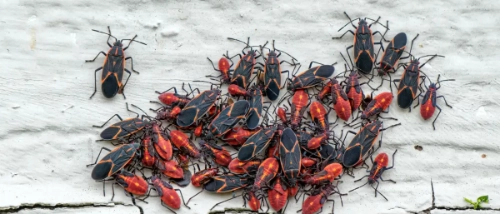
Thousands of bugs amass in New England during annual migrations, sometimes ending up in living rooms, production sites, and warehouses, entering through open doors, windows, and loading bays. When colder weather arrives, these black bugs gather on sun-lit exteriors and will squeeze through cracks or gaps to shelter indoors. Taking precautions during peak season can help to limit invasions, but many property owners defer to professional box elder exterminators to control populations.
Appearance
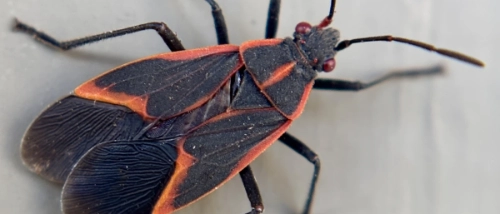
Adult boxelder bugs measure about ½ inch long, making them small but noticeable when present in large numbers. They have flat, oval-shaped bodies that are primarily black, with distinct red or orange lines traced along their thorax and wings. Their folded wings form an X-shaped pattern on their backs when at rest. Their reddish eyes, long, narrow legs, and antennae further distinguish them from other household invaders.
Nymphs, or immature boxelder bugs, are smaller, wingless, and bright red. They gradually darken as they grow and develop wing pads. These young bugs feed on boxelder, maple, and ash tree sap.
The vibrant boxelder bug markings make infestations highly visible when they appear on outside walls, siding, or windows.
Although easy to identify, boxelder bugs are difficult to manage in volume.
Habitat & Behavior
In the fall, box elder bugs are drawn to thermal heat radiating from trees, rocks, and buildings, as they search for sheltered places to overwinter. Boxelder bugs feed almost exclusively on boxelder tree seeds, as well as maple and ash seeds. They’ll also suck the sap from the leaves, flowers, and tender twigs of these trees for nourishment and to hydrate. While this feeding can cause some cosmetic damage, such as leaf discoloration or distortion, it rarely causes serious harm to the overall health of the tree.
As ‘true bugs’ related to stink bugs, boxelder bugs have defensive capabilities that include emitting a pungent smell to discourage predators when disturbed or handled roughly.
Seasonality
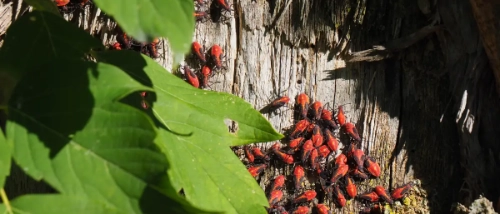
Like many insects, boxelder bug populations can rise and fall in multi-year cycles, often lasting five to seven years. They are most active in the fall and again in early spring. In the fall, the new generation of adults seeks out sheltered, warm places to hibernate over the winter, which is when swarms can enter buildings.
They leave their winter refuge in the Spring to mate. Females lay clusters of small, reddish-brown eggs in bark crevices and on leaves or seedpods. These eggs hatch into nymphs within approximately 10 to 14 days. The nymphs will feed on seeds and new growth throughout early summer and molt several times before maturing into winged adults, usually by mid-summer.
The good news is, they don’t reproduce inside, and indoor congregations are only temporary. However, repeated annual invasions can disrupt businesses when customers, visitors, and staff spend more time indoors, and homeowners may be uncomfortable cohabiting with box elder bugs at this chilly time of year.
Signs of an Infestation
Common symptoms of a boxelder bug infestation include:
- Live bugs clustering near windows, door frames, and baseboards
- Congregations behind siding or near rooflines
- Bugs emerging from walls on warm winter days
- Odor or mess when crushed
Although a vacuum may help remove visible insects, crushing them can leave stains and attract more pests. Because DIY solutions like sprays often fail to reach overwintering areas, homeowners frequently turn to box elder bug removal or boxelder extermination professionals who know how to repel boxelder bugs and prevent future re-entry.
Risks & Damage
Boxelder bugs aren’t dangerous or destructive in the same way as termites or carpenter ants; however, as infestations grow, some unsavory side effects make boxelder bug control essential for comfort and cleanliness indoors.
Skin Irritation
Though boxelder bugs do not bite, their piercing-sucking mouthparts can occasionally cause mild skin irritation or redness if handled or accidentally pressed against. This reaction is rare but unpleasant.
Staining & Odor
Boxelder bugs excrete a reddish-orange fecal fluid (often mistaken for rust marks) that can stain walls, curtains, and upholstery, especially when large numbers gather indoors. When crushed, they release a strong, lingering odor, making them particularly unpleasant to manage.
Seasonal Infestations
Their tendency to invade homes in large numbers during fall and early spring can lead to repeated issues year after year. Many die when trapped indoors during overwintering or when they emerge in the spring, which attracts other bugs and exacerbates the problem.
Treatment & Extermination Services
Don't let your boxelder bugs turn your building into their winter retreat! These pests can appear in the most unlikely places, such as loading docks, break rooms, storage areas, sunny office windows, and fissures in the home. It’s our job to find hidden clusters that can disturb tenants, visitors, and employees. When we visit, our service technicians will:
Inspect
Assess your property to find structural weaknesses and hotspots.
- Identify how boxelder bugs enter your home or building, including cracks, vents, and window frames.
- Locate harborage areas where bugs gather, such as siding gaps, attics, or sunny exterior walls.
- Assess nearby boxelder, maple, or ash trees that may attract and sustain infestations.
Treat
Develop a solution to maximize the outcome.
- Apply targeted treatments to exterior entry points, wall voids, and other problem areas.
- Combine chemical and exclusion methods to reduce active populations and prevent re-entry.
- Use environmentally responsible solutions designed for long-term boxelder bug control.
Aftercare
Provide post-treatment support and advice.
- Provide custom recommendations to minimize future infestations based on your property layout.
- Advise on exclusion and maintenance steps, such as sealing gaps and repairing door screens.
- Offer ongoing monitoring and follow-up service to ensure continued protection season after season.
Boxelder Bug Prevention
Take a proactive approach: seal exterior gaps with caulk and fortify door screens with weather stripping or fine mesh. Early fall inspections are your secret weapon, helping you pinpoint potential problem areas before a full-blown infestation takes hold.
For properties near box elder trees, a little pruning goes a long way:
- Trim back branches that touch or overhang buildings to deny easy access.
- Clear away fallen seeds and debris at the base of the trees to make the area less appealing.
- Keep in mind that while removing box elder trees can reduce local populations, it isn’t always practical or necessary.
Once indoors, boxelder bugs gravitate toward windows, ceilings, and wall voids. A vacuum offers temporary relief for visible bugs, but it won’t solve the underlying issue. Over-the-counter sprays can even push them deeper into hidden crevices, making them harder to eliminate.
Our expert technicians deliver customized boxelder bug control by targeting high-risk zones and treating overwintering areas. Because these pests can be unpredictable, professional removal is often the most reliable way to prevent larger, repeat infestations for both commercial businesses and homeowners.
Frequently Asked Questions
While total elimination can be difficult, professional help significantly reduces boxelder bug populations. The goal is to limit how many get inside and stop them from returning year after year.
You’ll likely see more boxelder bugs because they’re trying to move indoors to escape the cold. Buildings near boxelder trees or with sunny, south-facing walls are especially attractive to these pests.
Boxelder bugs are most active in the fall, when they gather in large numbers to find shelter inside warm buildings, and again in early spring when they leave their overwintering spots.