1-800-222-2908 Call Now Book a Free Consultation

Bald Faced Hornet Identification

If you live in New England, you've probably seen a bald faced hornet. Despite its name, it is not a true hornet but a type of yellow jacket. These insects are striking in appearance, highly protective of their colonies, and known for their large paper nests that can be seen hanging in trees, shrubs, or attached to buildings.

Because of their defensive behavior, encounters with bald faced hornets often lead to painful stings. Understanding how to identify them, recognize their seasonal patterns, and know when to call for professional control can help keep your home or business safe during their most active months.

If you're a homeowner or business manager, JP Pest Services can provide you with the expertise and tailored solutions to allow you peace of mind that the stinging pests are at bay. 

Species: Dolichovespula maculata

Season: Summer, Autumn

Size: 15-20 mm

Region: Throughout the U.S.

How to Identify a Bald Faced Hornet

Identifying bald-faced hornets correctly is vital because their appearance and behavior are often confused with other wasps or hornets. Knowing the key features of these insects, along with the signs of their nests, can help you spot them early and decide whether professional control is needed.

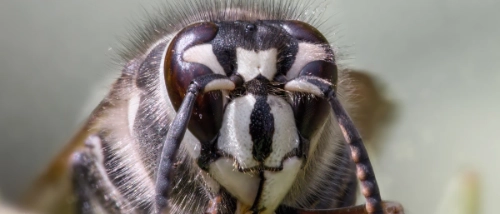
Bald Faced Hornet head on macro photo

Bald Faced Hornet Size & Appearance

Bald faced hornets are medium to large stinging insects. Workers typically measure between half an inch and five-eighths of an inch, while queens are larger. Their black bodies with white markings on the face and abdomen set them apart from other wasps and yellow jackets.

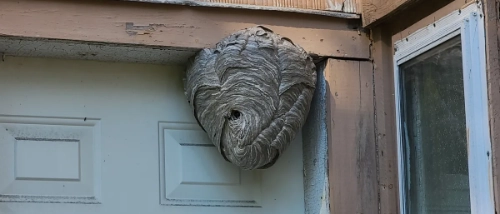
One of the easiest ways to identify them is by spotting their nests. These structures are paper-like, gray, and football-shaped, sometimes growing larger than a basketball. Nests can contain hundreds of individuals by late summer.

Bald Faced Hornet Life Cycle

The development of a bald faced hornet colony follows a seasonal rhythm that begins with a single queen and ends with the decline of the nest in fall. Understanding this cycle explains why activity peaks in late summer and why nests are rarely active through winter.

Bald Faced Hornet head on macro photo

Queen Emergence & Nest Building

The life cycle begins in spring when a single queen emerges from her overwintering site. After mating the previous fall, she is the only colony member to survive the winter. In spring, she searches for a suitable nesting site, often in trees, shrubs, or the eaves of buildings.

The female begins by constructing a small paper nest, laying eggs, and raising the first generation of workers. Once fully grown, the workers take over tasks of building, foraging, and defending, while the queen focuses solely on reproduction.

Seasonal Activity and Decline

By midsummer, nests grow rapidly, sometimes housing several hundred insects. Activity peaks in late summer, when colonies are at their largest. This is also when stinging incidents are most common, since the hornets become highly protective of their nests.

As temperatures drop, the colony declines. Workers and males die off, leaving only new queens. These queens overwinter in protected areas such as hollow logs, soil, or sheltered cracks, emerging the following spring to start the cycle again.

Bald Faced Hornet Behavior & Nesting Habits

The development of a bald faced hornet colony follows a seasonal rhythm that begins with a single queen and ends with the decline of the nest in fall. Understanding this cycle explains why activity peaks in late summer and why nests are rarely active through winter.

Common Nest Locations

Bald faced hornets prefer elevated sites for their nests. Common spots include tree branches, shrubs, building overhangs, and utility poles. Nests are often built at eye level or higher, making them easy to spot but difficult to avoid.

Unlike ground-nesting yellow jackets, bald faced hornets are more visible because of their aerial nesting behavior. However, their nests can be surprisingly close to human activity, especially in residential yards and commercial landscapes.

Stinging Risks

Bald faced hornets are known as an aggressive hornet type, though technically they are wasps. Disturbing their nest or even getting too close can trigger a defensive response. Unlike honey bees, which can only sting once, bald faced hornets are capable of stinging multiple times.

Their stings are painful, and because they attack in groups, multiple stings are possible in a single encounter. For individuals allergic to insect venom, stings can cause severe allergic reactions requiring medical care.

Because of these risks, handling or removing nests without professional help is not recommended.

Professional Bald Faced Hornet Control Services - Choose JP Pest

Dealing with bald faced hornets on your own can be risky. At JP Pest Services, we have dealt with bald faced hornets in New Hampshire and New England for decades, so we understand how to deal with these nuisance stinging pests. 

Professional control provides a safe, effective solution that not only removes existing colonies but also helps reduce the likelihood of new nests forming nearby. We provide residential pest control and  commercial pest control so your home and your business is properly protected. 

Related Pests

Aggressive ground-nesting wasps known for defending their colonies fiercely.

Solitary bees that bore into wood, causing structural damage.

Important pollinators that may require careful relocation when nesting near homes.

Slender wasps with open-comb nests often found under eaves or in sheds.

Frequently Asked Questions

These insects are dangerous in the sense that they actively defend their nests. They are not aggressive in seeking out people, but any disturbance near their nest can provoke a swift and coordinated attack.

While they are not considered poisonous, their venom does cause pain, swelling, and other reactions. They can also sting repeatedly, which increases the severity of encounters. For those with allergies, the danger is far greater.

Yes, bald faced hornets are native to North America. They are found throughout the United States and southern Canada, particularly in wooded areas, suburban neighborhoods, and places with abundant trees and shrubs. In New England, their nests are a familiar sight in both urban and rural settings.

While they are not primary pollinators like honey bees, they play a small pollination role. As they forage for nectar, they transfer pollen from plant to plant. They are also predators, feeding on flies and other insects, which makes them part of the natural balance in controlling pest populations.

However, their ecological benefits do not outweigh the risks when nests are near homes, schools, or businesses. In these cases, professional removal is the safest approach.

Nests can grow larger than a basketball by late summer, sometimes housing hundreds of hornets.

No. They are not poisonous, but their venom causes pain, swelling, and allergic reactions in some people.

Queens begin nest building in spring after emerging from overwintering sites.

Browse Other Pests

Go


For Service & Immediate Attention
Call 1-800-222-2908


Find Your Local Branch

Go

About Us

Protecting New England since 1925 with trusted pest solutions. Join our community-focused, expert team for worry-free results.