© 2026 Rentokil Initial plc © JP Pest Services. All Rights Reserved.
Honey bees, specifically the European honey bee, are non-native to New England, having been introduced by European settlers in the 17th century for honey and pollination. These social insects are essential pollinators in agriculture and natural ecosystems; however, they raise safety concerns for residential and commercial property owners. Large colonies or unexpected honey bee swarms in farms, orchards, and distribution centers can be unsettling and disruptive. Although vital for biodiversity, finding honey bee hives in wall voids, chimneys, or sheds brings them too close for comfort.
Species: Apis mellifera
Season: Summer, Autumn
Size: 1/2-5/8 inches
Region: Throughout the U.S.
Honey Bee Identification
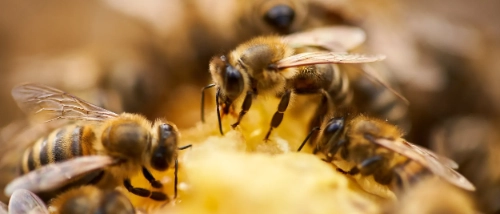
Honey bees are often mistaken for wasps or hornets, but they have distinct features that make identification easier. With golden-brown, fuzzy bodies and a more deliberate, steady flight, they’re less aggressive and usually sting only when provoked. Unlike other stinging pests, a honey bee can sting only once. If you see a large group clustered together, it may be a honey bee swarm searching for a new nest site.
Honey Bee Life Cycle
The honey bee life cycle includes four stages: egg, larva, pupa, and adult. Queens lay fertilized eggs into wax honeycombs, where they hatch into larvae after about three days. These larvae are then fed and cared for by worker bees. After roughly a week of feeding, the larvae are sealed inside wax cells to pupate. About 12 days later, they emerge as adult bees, ready to take on roles within the hive.
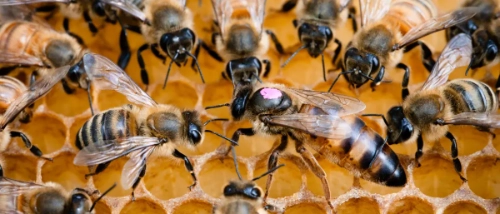
Each bee has a specific job depending on its caste. Queens are responsible for laying eggs, drones exist to mate with queens, and worker bees perform the many tasks needed to maintain the hive, such as cleaning, feeding, defending, and foraging. A single colony can include tens of thousands of bees, all working in sync to keep the hive healthy and functioning through the year.
Honey Bee Habitat
The honey bee habitat includes both wild and managed environments. They often nest in tree hollows or other enclosed spaces that offer protection and the right conditions to build wax combs to store honey and pollen and raise their young.
Occasionally, honey bees may build nests in or near buildings when natural nesting sites are limited or when they are drawn to the warmth and shelter provided by man-made structures. Roof rafters, wall voids, and chimney flues in homes, warehouses, and storage units can offer protection from predators and weather, bringing bees into close contact with people.
In agricultural settings, beekeepers provide structured hives that mimic natural nesting conditions and offer bees a safe place to live and work. As long as they have steady access to nectar and water, honey bees can thrive. When nests become overcrowded or food becomes scarce, bees may swarm in search of a new habitat.
Behavior and Characteristics of Honey Bees
Honey bees live in large, well-organized colonies that include a queen, hundreds of drones, and thousands of worker bees. Each group has specific responsibilities that support the entire hive. Bees communicate through movement, especially a waggle dance that shares food location details.
These insects are most active between spring and fall, with peak activity during late summer. Unlike wasps and hornets, which die off in winter, honey bees survive as a whole colony by staying inside the hive, eating stored honey, and vibrating their wings to keep warm. Though capable of stinging, they are not naturally aggressive and usually sting only in defense of the hive.
Diet and Pollination Role
Honey bees feed on nectar and pollen, which are essential for their survival. Nectar is converted into honey, which provides energy, especially during the winter, while pollen offers protein to help raise larvae.
Their foraging behavior makes them some of the most important pollinators in nature and agriculture. As they collect nectar, they transfer pollen between plants, supporting the growth of more than 100 crops in the U.S. Without honey bees, the availability of many fruits, vegetables, and nuts would decline significantly.
Frequently Asked Questions
Honey bees typically build their nests in tree hollows but may also choose wall voids, chimneys, or attics. These spaces offer protection and enough room to support their colonies. When natural sites are limited, bees often seek structures that provide the shelter and stability they need.
In rural areas, honey bees thrive with access to fields and crops. Urban bees forage in parks and gardens, but face pollution, fewer flowers, and pesticide use. Despite the challenges, honey bees adapt and continue their essential pollination work. If you find any nests in your building, it’s best to work with professionals to safely relocate honey bees rather than try to move them yourself.
Honey bees are essential pollinators, supporting the reproduction of many plant species and helping to grow key crops like apples, almonds, and blueberries. Without them, food availability would drop, and natural plant cycles would suffer.