© 2026 Rentokil Initial plc © JP Pest Services. All Rights Reserved.
Paper wasps are widespread in the United States and active during the warmest months of the year. They build their umbrella-shaped nests from a paper-like pulp of chewed wood and saliva. These insects can be beneficial in controlling caterpillars and flies, but can be a threat to people. Paper wasps have been known to build nests under rooflines, decks, or attic rafters. Moreover, they can interfere with workplace productivity, unsettle employees, and create safety hazards where machinery is being operated.
Species: Polistes.
Season: Summer, Autumn
Size: 1.9 to 3.2 cm
Region: Throughout the U.S.
Paper Wasp Identification
Paper wasps are slender with long legs that dangle in flight, and their narrow waists make them look less bulky than other stinging pests, like yellow jackets or hornets. Their nests are open and umbrella-shaped, with visible hexagonal cells, unlike the enclosed paper nests of hornets. If you discover a nest close to entryways or high-traffic areas, it’s best to contact professionals for residential or commercial wasp removal services.

Paper Wasp Behavior
Paper wasps live in small colonies and are considered semisocial insects. Their nests, usually suspended from a single stalk, can be found on branches, eaves, or porch ceilings. While not naturally aggressive, they will sting if disturbed, and their stings can be painful or even dangerous for those with allergies.
Colonies are busiest between May and October, with adults hunting caterpillars, flies, and other insects for their larvae. They also drink nectar for energy, making them occasional pollinators. Understanding paper wasp behavior helps people avoid accidentally provoking them and reduces the chance of painful encounters.
Paper Wasp Life Cycle
The paper wasp life cycle begins in spring when fertilized females, known as queens, emerge from winter shelters to start new colonies. Each queen begins by building a small paper nest and laying eggs. Once the larvae hatch, they are fed chewed-up insects until they become workers. These workers take over nest duties, expanding the structure and feeding new larvae, while the queen focuses on laying more eggs.
By late summer, males and new queens are produced. As autumn arrives, inseminated queens search for sheltered spots to overwinter, often in attics, wall voids, or under loose bark. Workers and males die off with the first frost, leaving only the new queens to survive and restart the cycle in spring.
Paper Wasp Habitat & Nesting Habits
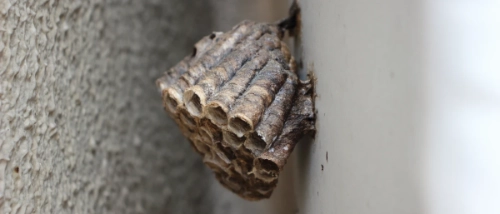
Paper wasps build nests from chewed plant fibers mixed with saliva, giving them a gray, papery texture. These nests are often found hanging from branches, eaves, soffits, attic rafters, or porch ceilings. The open cells of the nest look like tiny hexagonal chambers, where eggs are laid and larvae develop. Colonies remain relatively small, usually fewer than 100 individuals, but nests can be placed in inconvenient or hazardous spots where people are likely to come into contact with them.
Their habit of nesting near homes, decks, and other structures raises the risk of accidental disturbance. While homeowners and employees can learn to identify wasps by their nests to contain and control the infestation, safe removal should always be left to professionals to avoid painful stings.
Diet and Feeding Habits
Paper wasps rely on both nectar and prey to survive. Adults drink nectar from flowers for energy, sometimes making them beneficial in gardens. At the same time, they hunt soft-bodied insects like caterpillars and flies to feed their developing larvae. This combination of plant and insect foods makes them active hunters and foragers in summer and autumn. As colonies produce new queens in late summer, feeding activity shifts to support their survival through winter. While paper wasps can reduce insect pests outdoors, their proximity to people often outweighs these benefits.
Frequently Asked Questions
Paper wasps (Polistes) are slender, measuring ¾ to 1¼ inches. They’re usually brown with yellow markings, though some species have reddish-orange tints. They have long, dangling legs during flight and a very narrow, "pinched" waist so they have a longer, more elegant shape than stockier yellowjackets.
They create distinct, open-cell "umbrella" nests made from chewing wood fibers and adding saliva. This dries into a gray, papery material. Unlike hornets or yellowjackets, paper wasps don’t build an outer protective envelope around their nests. You can always see individual hexagonal brood cells from underneath.
Adults are primarily pollinators that feed on nectar for energy. However, they are also predators of garden pests like caterpillars, beetle larvae, and flies to provide protein for their developing larvae. If you have a thriving vegetable garden, you’ll likely have paper wasps nearby acting as natural pest control.
They’re most active from late spring to early autumn. While less aggressive than other stinging insects, they’ll vigorously defend their nest if it’s disturbed. "Accidental" stings are common during routine home maintenance as they often build nests under deck railings, behind shutters, and near door frames.
Wasp, Hornet, or Yellow Jacket?
Knowing which stinging insect is on your property tells you how aggressive the hive will be. Paper wasps are often manageable, but yellowjackets in wall voids require professional extraction. Find out more about paper wasp control or schedule a safe nest removal.