© 2026 Rentokil Initial plc © JP Pest Services. All Rights Reserved.
Blow flies are some of the most recognizable flies found around homes and businesses. Their metallic blue or green appearance often draws attention near waste areas, food sources, or decaying organic material. While blow flies play a role in natural decay outdoors, their presence indoors or around commercial spaces usually signals a sanitation or moisture issue that requires attention.
Because blow flies reproduce quickly, even a small source can lead to ongoing activity. Addressing the underlying cause and getting proper fly control early helps reduce health risks and limits the chance of repeat infestations.
Species: Calliphora spp, Lucilla spp.
Season: Spring, Summer, Autumn, Winter
Size: 1/8-5/8”
Region: Throughout the U.S.
Blow Fly Control in New England
For property owners in New England, the need to eliminate blow flies often goes beyond what is immediately visible. Persistent activity can point to underlying conditions that require professional attention.
JP Pest Services provides blow fly control services designed to reduce active infestations and help limit recurring issues. Our approach focuses on accurate assessment and informed recommendations, supporting longer-term control rather than short-term fixes.
Struggling with Flies?
Call now to book your free inspection.
What Do Blow Flies Look Like?
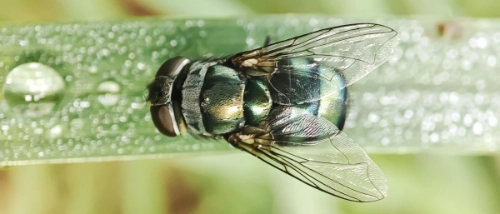
When you search through images or have physical encounters, you’ll notice adult blow flies that are often shiny and metallic. They range in size from a few millimeters to slightly over a centimeter in body length. The most striking types appear green and are often called green bottles. Others can show metallic blue or black-green tones. Their eyes occupy a significant part of the head, and their wings are translucent.
Female blow flies often have a spindle-shaped abdomen that you can notice if looking closely. Their legs may appear longer relative to their body versus those of house flies. People usually see them swarming around decaying food or open garbage. They rarely appear in clean areas like food prep zones unless there’s an issue. Keeping things clean and using exclusion methods can stop infestations. However, once eggs are laid, it’s more than just a visible problem. For restaurants, bakeries, butcher shops, or even farmer’s markets a blow fly exposure is a serious warning sign.
Blow Fly Facts & Identification
Blow flies belong to the family Calliphoridae in the insect world. They are commonly called greenbottles or bluebottles because of their metallic color. They differ from house flies in body shape and behavior. Blow flies have sturdier, rounder bodies and often hover around decaying matter. In comparison, house flies have narrower bodies and tend to hover around food preparation areas indoors.
The life cycle begins when a mature female blow fly lays eggs on rotting food sources such as meat scraps or animal carcasses. After hatching, the blow fly larvae feed voraciously before pupating and emerging as adult flies. It only takes days for this cycle to complete during warm weather. Adult blow flies live long enough to lay more eggs, especially if they find abundant food. That means their populations can grow quickly under favorable conditions.
One common type within the broader category of blow flies is the green bottle. This variety will look for open wounds or animal carcasses to deposit eggs and can even trigger a blowfly infection. Veterinarians are familiar with this in livestock where larvae may invade injured tissue. It's important to know how to spot a blowfly. This is crucial for businesses that can't risk having these insects associated with their brand.
What Do Blow Flies Look Like?
When you search through images or have physical encounters, you’ll notice adult blow flies that are often shiny and metallic. They range in size from a few millimeters to slightly over a centimeter in body length. The most striking types appear green and are often called green bottles. Others can show metallic blue or black-green tones. Their eyes occupy a significant part of the head, and their wings are translucent.
Female blow flies often have a spindle-shaped abdomen that you can notice if looking closely. Their legs may appear longer relative to their body versus those of house flies. People usually see them swarming around decaying food or open garbage. They rarely appear in clean areas like food prep zones unless there’s an issue. Keeping things clean and using exclusion methods can stop infestations. However, once eggs are laid, it’s more than just a visible problem. For restaurants, bakeries, butcher shops, or even farmer’s markets a blow fly exposure is a serious warning sign.

Signs of Blow Fly Infestation
Infestation by blow flies starts small but grows fast. One of the earliest signs is the presence of eggs or larvae, commonly known as maggots, around rotting food or animal carcasses. These may appear as small white larvae, a few millimeters long. The larvae feed on decaying matter for several days before they pupate. If adults are left uncontrolled, they go through life cycle stages rapidly under warm conditions. This leads to more maggot development and more adult flies.
When adults emerge they tend to deposit eggs in crevices near food or moist organic waste. The larval activity can cause foul odors as they break down materials. If maggots infest wounds, whether in animals or rarely humans, it results in a blowfly infection. In food or waste-handling areas, the presence of adult flies circling trays or bins is a red flag for blowfly infestation. Businesses especially need to take action before the infestation becomes obvious to customers.
Seeing green bottles near dumpsters or inside a back alley at dusk is another sign that food or waste is attracting them. Adult flies need moisture and decaying protein, so even a pet food bowl left outside overnight could support breeding. Left unchecked, populations can multiply to a point where adult flies begin appearing inside establishments.
Common Businesses Targeted by Blow Flies
Businesses that often attract blow flies include:
- Butcher Shops
- Seafood Market
- Restaurants
- Caterers
- Food Processing Plants
Another high-risk place is veterinary clinics, animal shelters, or butcheries. These areas may have animal remains. Waste-handling facilities, like grocery stores, compost sites, and public parks, can face infestations. Locations near farmland where livestock grazing or wildlife activity occurs are especially prone because animal carcasses or manure may attract flies.
Regardless of industry, each of these businesses must prioritize sanitation around waste disposal, structural sealing, and rapid removal of food or organic waste that could attract adults seeking to lay eggs.
Get Rid of Blow Flies
Effective blow fly control typically involves addressing several contributing factors at the same time. A professional approach may include:
Remove What Attracts Blow Flies
Identify and address breeding sources, such as waste areas, drains, and hidden organic material. Enhance sanitation by regularly cleaning bins and storing waste properly.
Block Access And Treat Activity
Seal gaps around doors, windows, rooflines, and foundations to reduce entry. Apply targeted treatment where adult flies or larvae are active.
Break The Life Cycle And Monitor
Tackle conditions before eggs and larvae mature, and continue to monitor for early signs of new activity, which helps reduce current flies and limit repeat infestations.
Most importantly prompt response to early signs like larvae or adult buzzing helps prevent large outbreaks.
For professional blow fly control and help with preventing or exterminating blowfly infestations, contact JP Pest Services today.
Frequently Asked Questions
Blow flies are medium-sized flies (about 1/4" to 1/2") known for their distinct metallic "bottle" appearance, usually in shades of shiny green, blue, or bronze. They are significantly more robust than common house flies and produce a much louder, deeper buzzing sound when trapped in windows or light fixtures.
Their lifecycle is fast, moving from egg to adult in just 2 to 4 weeks. Under the humid summer conditions common in Massachusetts and New Hampshire, this process can accelerate, leading to a sudden "explosion" of hundreds of flies inside a home within just a few days of eggs being laid.
Blow flies are nature’s primary scavengers, attracted to decaying organic matter, fresh carcasses, and animal waste. In suburban New England, we often find overflowing "pest-proof" garbage bins or neglected pet waste in the yard: these are the primary magnets that draw these flies to the home's entry points.
They lay eggs directly on rotting material, so the hatching maggots have an immediate food source. If you see "rice-like" clusters in your trash bin or near a crawlspace vent, they are blow fly eggs. They must be cleaned with an enzymatic cleaner to prevent a secondary hatch.
A sudden appearance of multiple blow flies indoors almost always indicates a hidden food source, such as a dead rat, mouse or squirrel within an attic or wall void. As blow flies can detect decay from over a mile away, they often find these carcasses before homeowners notice the odor.
Can't Find the Source of the Flies?
Blow flies are "biological indicators." Their presence usually means there’s a secondary pest issue, such as a dead rodent, hidden in your home's structure. Find out more about Fly Control Service or Request a Wall-Void Inspection.